Hotline (Mon to Fri 9am to 6pm): 1800-336-5855


0

Hotline (Mon to Fri 9am to 6pm): 1800-336-5855


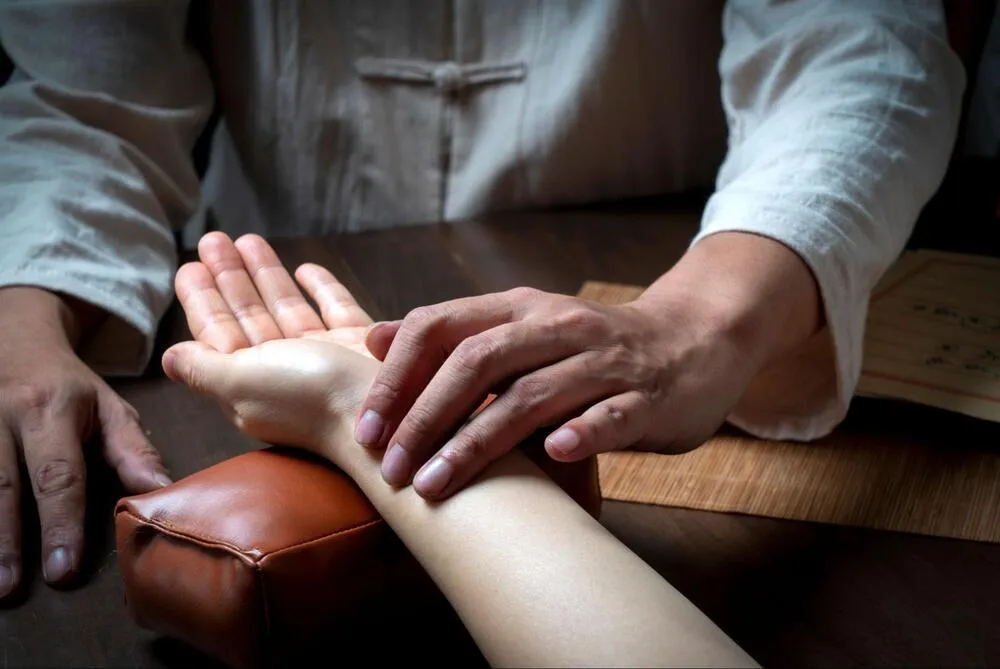
Children’s health and development are important priorities for many parents, especially when it comes to building strong immunity, maintaining healthy digestion and supporting overall wellbeing.
In Singapore, some families are exploring Traditional Chinese Medicine as a complementary approach to help manage common childhood concerns such as frequent coughs, weak appetite or digestive discomfort.
As awareness of holistic healthcare grows, more parents are searching for TCM clinics for children’s health in Singapore that provide gentle treatments suitable for children.
Paediatric TCM focuses on strengthening the body’s natural balance while supporting a child’s growth and development. Therapies such as paediatric Tuina massage, customised herbal remedies and dietary guidance are often tailored according to the child’s age, symptoms and body constitution.
In this blog, we explain how TCM for children’s health works, the common conditions it may support and what parents should know when choosing a safe and trusted TCM clinic in Singapore.
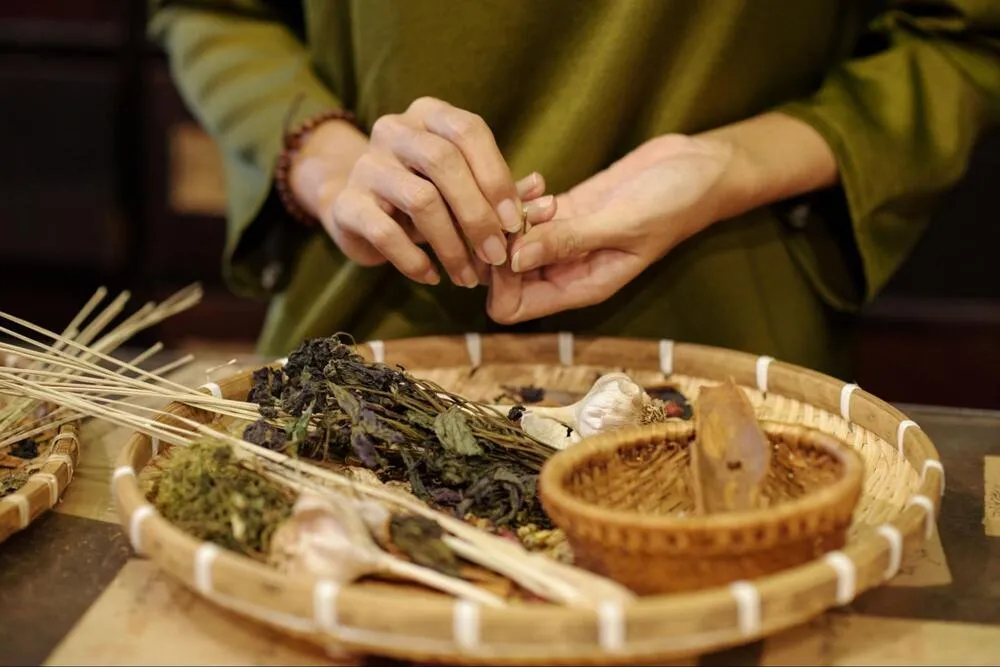
Traditional Chinese Medicine (TCM) for children’s health refers to TCM treatments and therapies that are specifically adapted for infants, toddlers and young patients. In TCM theory, children’s bodies are considered more sensitive and still developing, which means treatments are typically gentler and tailored to support their natural growth, immunity and overall wellbeing.
Paediatric TCM focuses on strengthening key bodily functions such as digestion, respiratory health and immune balance. Practitioners assess a child’s symptoms, body constitution and lifestyle factors before recommending suitable therapies.
Depending on the condition, treatments may include herbal medicine, paediatric Tuina massage, dietary guidance or other gentle techniques designed to support the body’s natural healing process.
Many parents explore TCM as a complementary approach to help manage common childhood concerns such as frequent coughs, weak appetite or digestive discomfort. When provided by registered practitioners in licensed clinics, TCM can be integrated alongside conventional medical care to support children’s health and development.
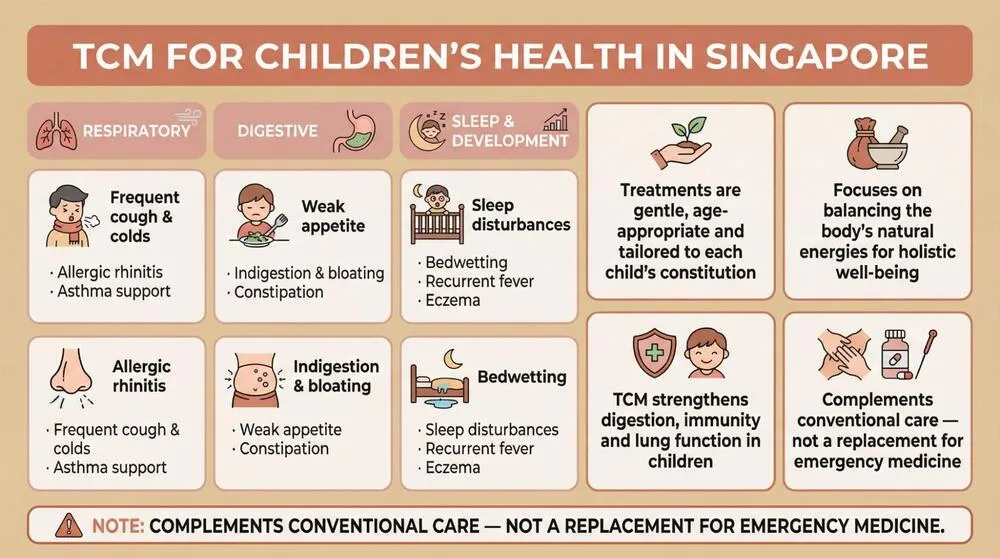
Paediatric TCM clinics in Singapore commonly support children experiencing a range of recurring respiratory, digestive and immune-related concerns.
Traditional Chinese Medicine focuses on strengthening the body’s natural functions, particularly digestion and immunity, which are considered essential for children’s growth and development. Treatments are usually gentle and tailored to the child’s age, constitution and specific symptoms.
Children who experience recurring coughs or frequent colds may have weaker respiratory and immune functions. TCM treatments aim to strengthen lung function and support the body’s natural defence mechanisms to reduce the frequency of infections.
Allergic rhinitis in children often presents as frequent sneezing, a runny nose or nasal congestion. TCM therapies focus on regulating the immune system and supporting respiratory health to help manage sensitivity to environmental triggers.
TCM may be used as a complementary approach to support children with asthma under medical supervision. Treatments aim to strengthen lung function and improve overall respiratory resilience.
Some children experience poor appetite due to weaker digestive function. TCM focuses on supporting the spleen and stomach systems, which are believed to play an important role in digestion and nutrient absorption.
Digestive discomfort such as bloating, stomach pain or irregular digestion may occur when digestive functions are not fully developed. TCM therapies aim to regulate digestion and improve the body’s ability to process food.
Constipation is a common concern among children and may be linked to dietary habits or digestive imbalance. TCM approaches support bowel regularity by promoting healthy digestive function and improving circulation in the digestive system.
Some children may experience difficulty falling asleep, restless sleep or frequent waking. TCM aims to restore internal balance and support calmness in the body, which may help improve sleep quality.
Bedwetting in children can sometimes be associated with delayed bladder control or developmental factors. TCM therapies may focus on strengthening kidney function and supporting overall body regulation.
Frequent fever episodes may indicate an underlying imbalance in the immune system. TCM treatments aim to support the body’s defensive energy and improve overall resistance to illness.
Eczema is a common skin condition among children that may cause itching and irritation. TCM approaches often focus on reducing internal heat, improving circulation and supporting skin health.
Note: TCM does not replace emergency medical care but may complement conventional treatment under professional supervision.
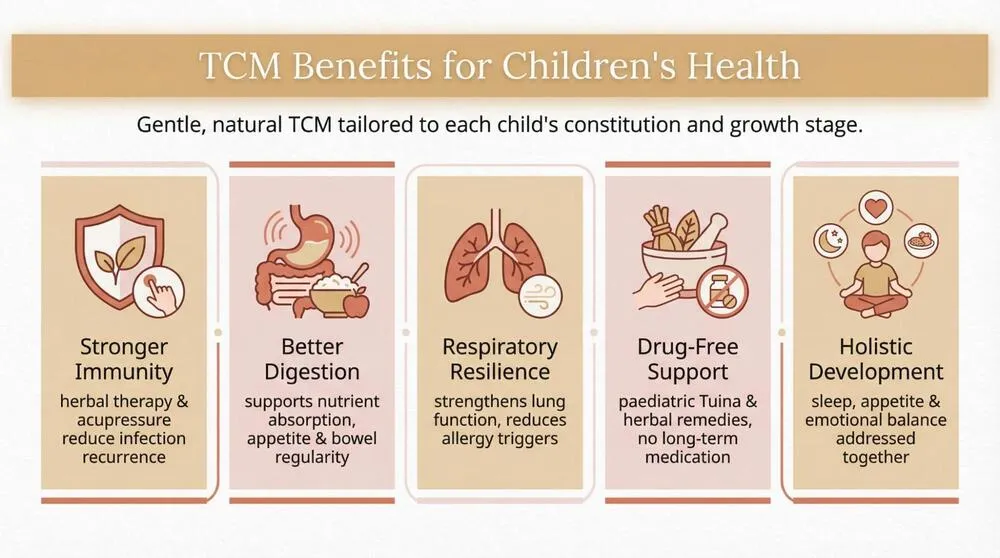
Parents considering TCM for children’s health often look for gentle and natural approaches that support their child’s overall well-being.
Traditional Chinese Medicine focuses on strengthening the body’s internal balance, particularly digestion and immunity, which are considered important for a child’s growth and development.
Herbal therapy and acupressure techniques help regulate immune function and reduce recurrence of common infections. By supporting the body’s natural defence system, TCM may help children become more resilient to frequent coughs, colds and seasonal illnesses.
TCM addresses weak appetite, bloating and irregular bowel movements by supporting digestive function. When digestion improves, children may absorb nutrients more effectively, which supports growth and energy levels.
For children prone to cough or allergies, TCM aims to strengthen lung function and reduce triggers. This approach may help manage recurring respiratory discomfort and support overall respiratory health.
Many TCM treatments focus on regulating the body naturally without long-term reliance on medication. Gentle therapies such as paediatric Tuina and herbal remedies are commonly used to support the body’s natural healing process.
TCM considers sleep quality, appetite and emotional balance as part of overall health. By addressing multiple aspects of wellbeing, TCM aims to support healthy development and long-term balance in the body.
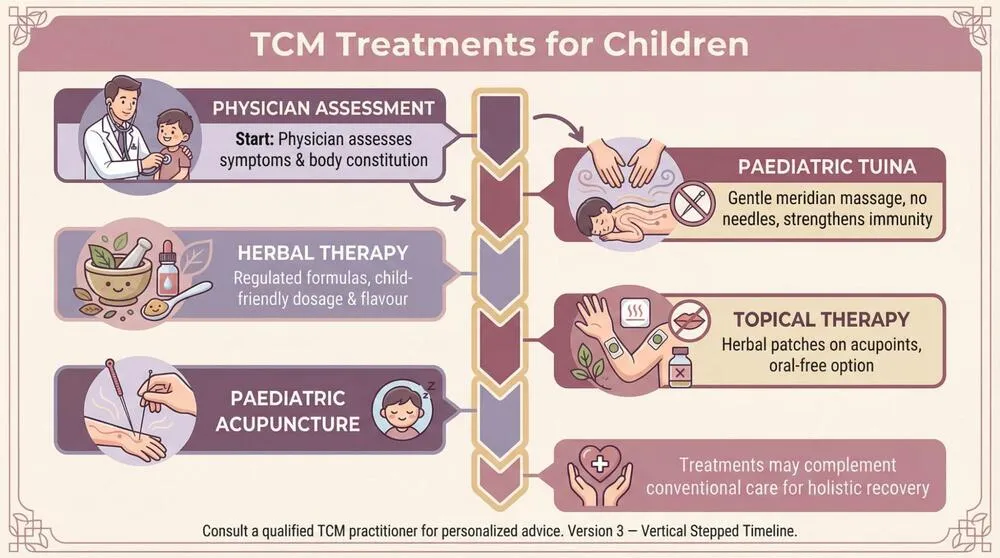
Paediatric TCM clinics use gentle therapies designed specifically for children’s developing bodies. These treatments focus on strengthening immunity, improving digestion and supporting respiratory health while keeping the child comfortable during treatment.
At clinics such as Ma Kuang, physicians evaluate the child’s symptoms and body constitution before recommending a suitable therapy.
Paediatric Tuina is a specialised therapeutic massage designed for infants and children. The technique uses gentle stimulation of acupoints along meridian pathways to improve Qi and blood circulation and strengthen immunity. It is commonly used to support conditions such as cough, constipation, digestive discomfort and sleep disturbances.
Chinese herbal medicine is commonly prescribed by TCM physicians based on the child’s symptoms and body constitution. Herbal formulas may be customised and sometimes adjusted in flavour or dosage to make them more suitable for children. At Ma Kuang, herbal powders used are regulated and evaluated to meet safety standards.
Topical therapy involves placing herbal medicine on specific acupoints on the body to achieve therapeutic effects. This method allows herbal ingredients to stimulate acupoints without requiring the child to take oral medication.
Acupuncture may be recommended for certain paediatric conditions. When used for children, practitioners typically use thinner and shorter needles and apply techniques designed to minimise discomfort. The goal is to regulate Qi flow, improve circulation and support the body’s natural healing process.
Together, these therapies allow paediatric TCM physicians to tailor treatments according to each child’s age, symptoms and body constitution. In many cases, TCM may be used alongside conventional medical care to support recovery and overall well-being.

TCM clinics for children’s health in Singapore are generally considered safe when treatments are provided by qualified and licensed practitioners. In Singapore, Traditional Chinese Medicine practitioners must be registered with the Traditional Chinese Medicine Practitioners Board (TCMPB), which regulates professional standards and ensures practitioners meet recognised training and licensing requirements.
Paediatric TCM treatments are designed to be gentle and suitable for children’s developing bodies. Therapies such as paediatric Tuina massage, customised herbal prescriptions and other supportive techniques are commonly adapted according to the child’s age, symptoms and body constitution.
During a consultation, the TCM physician will assess the child’s condition and recommend treatments that are appropriate for their health needs. Parents are encouraged to choose reputable TCM clinics with experienced practitioners who are familiar with paediatric care.
When performed by registered professionals and used appropriately, TCM may serve as a complementary approach alongside conventional medical care to support children’s overall health and well-being.
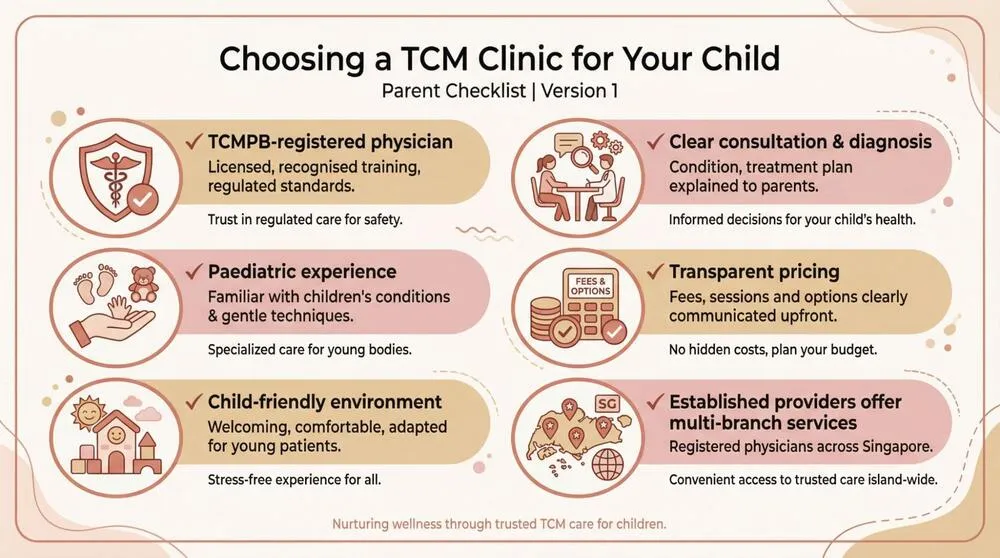
When searching for TCM clinics for children’s health in Singapore, parents should consider several factors to ensure that the clinic provides safe, professional and child-appropriate care. Paediatric TCM treatments require practitioners who understand children’s developing bodies and can tailor therapies to suit their age and condition.
When evaluating a clinic, consider the following:
Established TCM providers such as Ma Kuang TCM Medical Centre have multiple clinics across Singapore and offer paediatric TCM services supported by registered physicians and personalised treatment plans. Choosing a reputable clinic ensures that children receive appropriate care in a professional and supportive environment.
Children’s health needs can change as they grow, and parents often look for supportive approaches that promote overall well-being. For families exploring TCM clinics for children’s health in Singapore, Traditional Chinese Medicine offers gentle therapies designed to strengthen immunity, improve digestion and support respiratory health in developing children.
Treatments such as paediatric Tuina massage, customised herbal therapy and other child-appropriate techniques aim to address common concerns while supporting the body’s natural balance.
If you are considering TCM as part of your child’s healthcare journey, consulting an experienced clinic can help ensure that treatments are tailored to your child’s specific needs. Ma Kuang TCM Medical Centre provides paediatric TCM services delivered by registered physicians and experienced practitioners across multiple clinics in Singapore.
Seeking professional guidance allows parents to better understand how TCM may complement conventional medical care and support their child’s long-term health and development. Contact us today!
TCM for children’s health refers to Traditional Chinese Medicine treatments designed specifically for infants and young patients. These therapies focus on supporting immunity, digestion and respiratory health while taking into account the child’s developing body and constitution.
Yes, several licensed TCM clinics in Singapore provide paediatric services. These clinics may offer treatments such as paediatric Tuina massage, herbal therapy and other gentle techniques tailored for children.
Paediatric Tuina is a gentle therapeutic massage technique designed for infants and children. When performed by registered TCM practitioners, it is generally considered safe and is commonly used to support digestive health, immunity and sleep.
TCM may help support respiratory health in children who experience frequent coughs or colds. Treatments aim to strengthen lung function and improve overall immune balance, which may help reduce the recurrence of respiratory discomfort.
No. TCM does not replace conventional paediatric care or emergency medical treatment. It is typically used as a complementary approach alongside conventional medical care under professional supervision.
The number of sessions depends on the child’s condition and overall constitution. Mild concerns may improve within a few sessions, while chronic respiratory or digestive issues may require regular treatments over several weeks as recommended by the TCM physician.


We recently gathered at our Ma Kuang Holistic TCM Wheelock Place clinic alongside with KOMO Scalp & Hair Wellness, celebrating our shared philosophy of “Root & Bloom” (内养外焕)—a sensory journey connecting inner health with outer radiance. At Ma Kuang Holistic TCM, we believe true wellness goes beyond traditional care. By integrating TCM-based therapies with modern […]
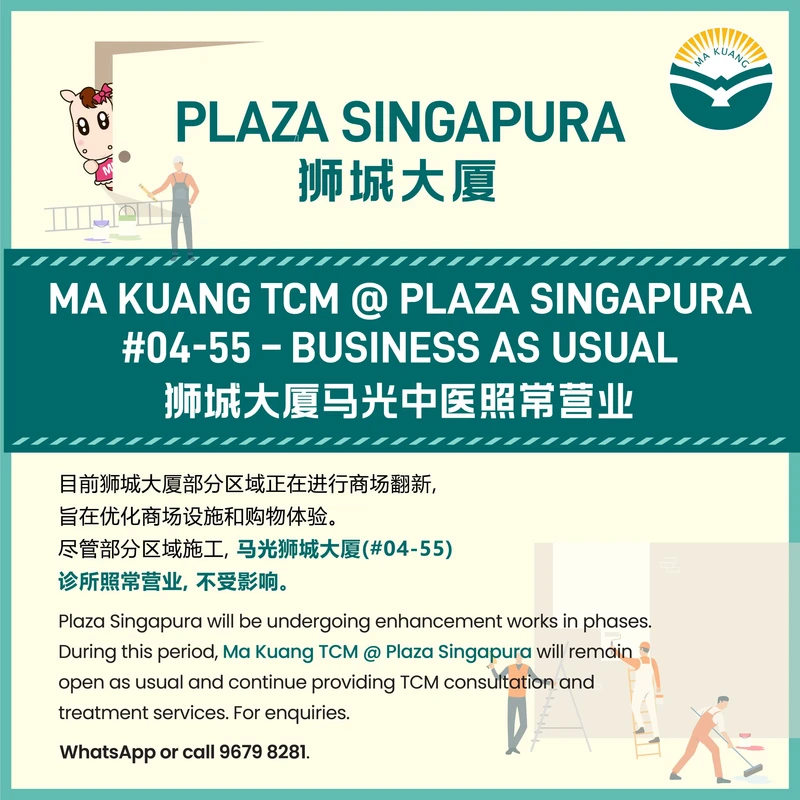
Plaza Singapura will be undergoing enhancement works in phases. During this period, Ma Kuang TCM @ Plaza Singapura will remain open as usual and continue providing TCM consultation and treatment services. 📍Location: 68 Orchard Rd #04-55, Plaza Singapura, Singapore 238839🔔Operating Hours: Mon-Fri 10AM – 9PM; Sat-Sun 10AM – 8PM Patients are welcome to make appointments […]
A first TCM fertility consultation may cover medical and menstrual history, lifestyle factors, general well-being and an individual care plan. […]
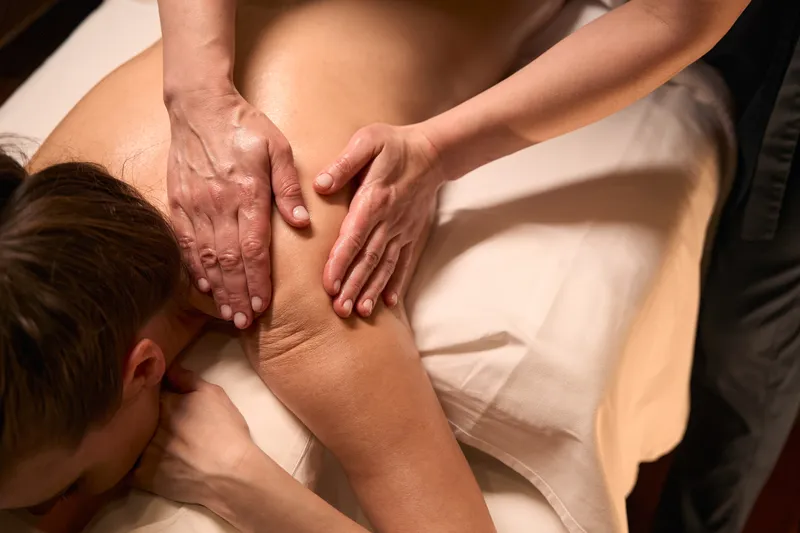
Not every tuina provider follows the same standards. See what to check on credentials, assessment approach, and clinic setup before booking your first session. […]
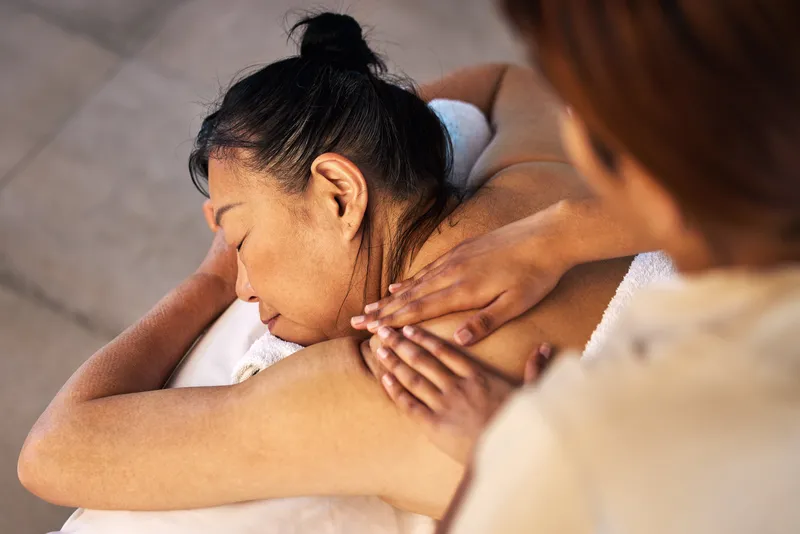
Both feel like a massage, but only one is a therapeutic TCM treatment. See how tuina in Singapore differs from spa relaxation massage in method, purpose, and outcome. […]
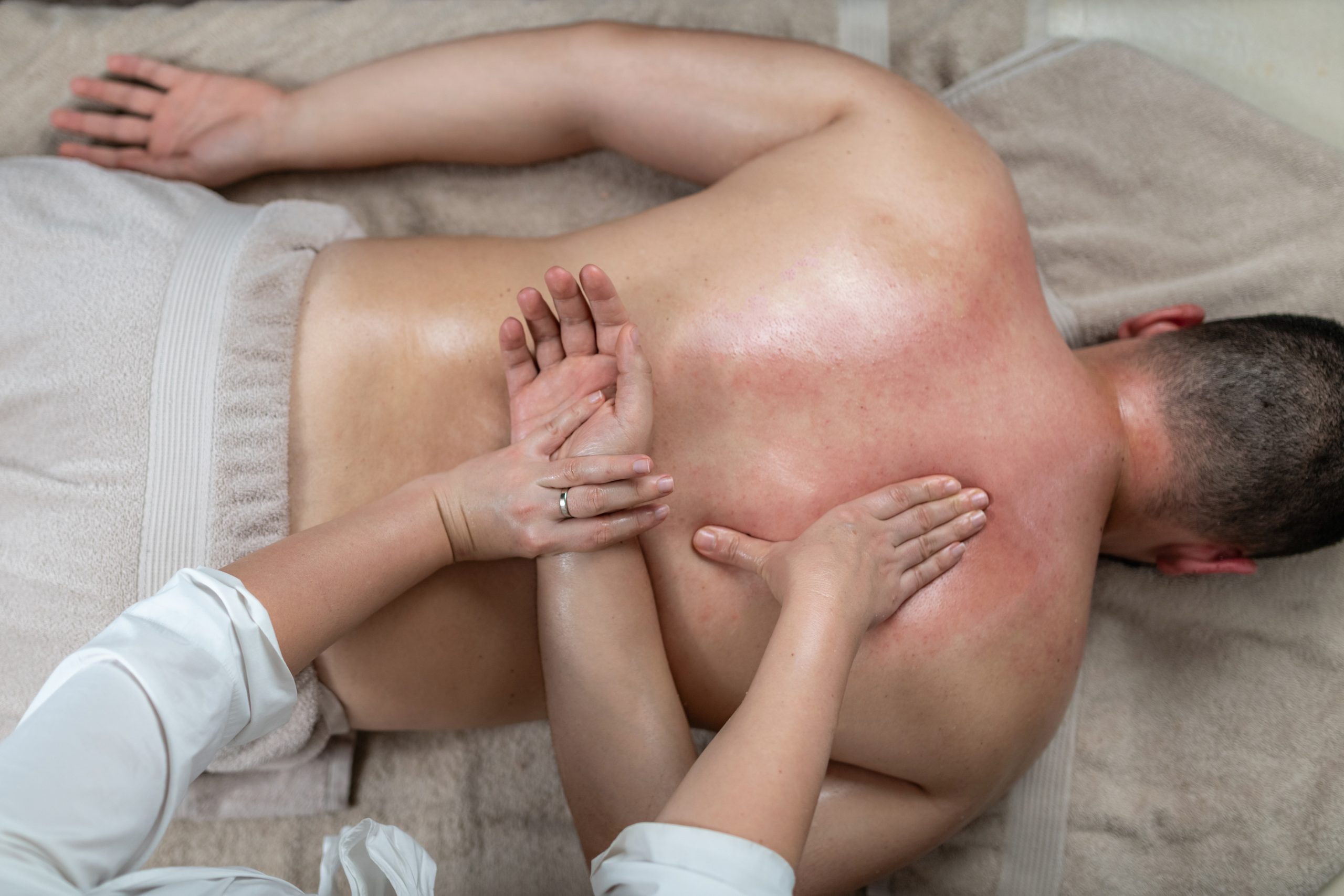
Acute and chronic pain call for different TCM approaches. See how physicians assess each, and what a first consultation may typically cover for either type. […]

See when couples in Singapore turn to TCM for fertility, including age 35+, PCOS, endometriosis, secondary infertility and post-loss care. […]
See how TCM physicians in Singapore build prevention into daily life — seasonal food, constitutional checks, and habits for aircon, humidity and stress. […]
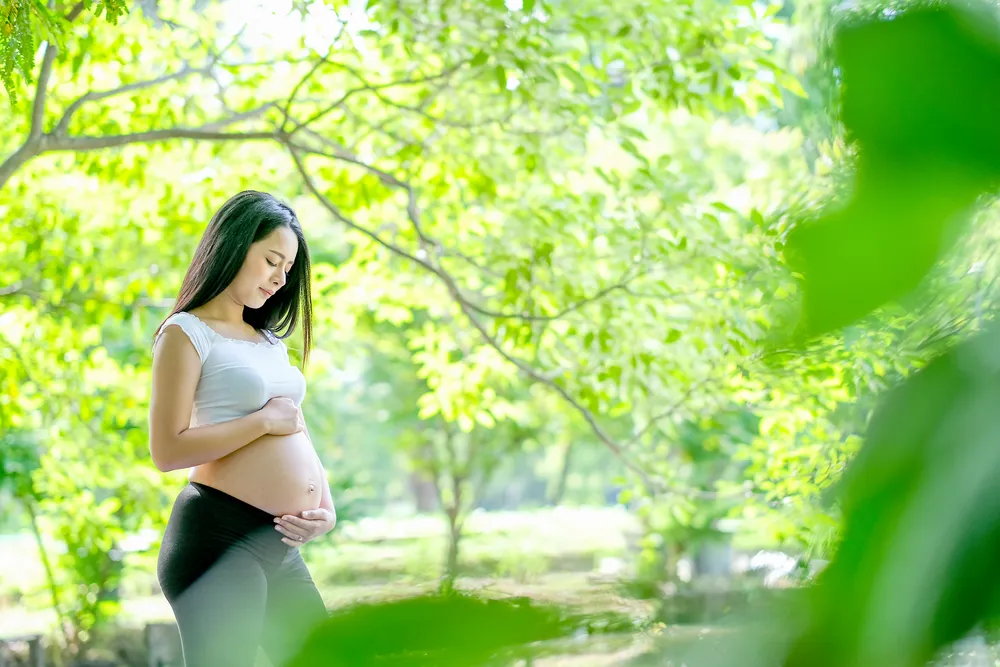
See how TCM practitioners in Singapore read six body signals — cycle, sleep, digestion, mood — women often find useful before planning pregnancy. […]
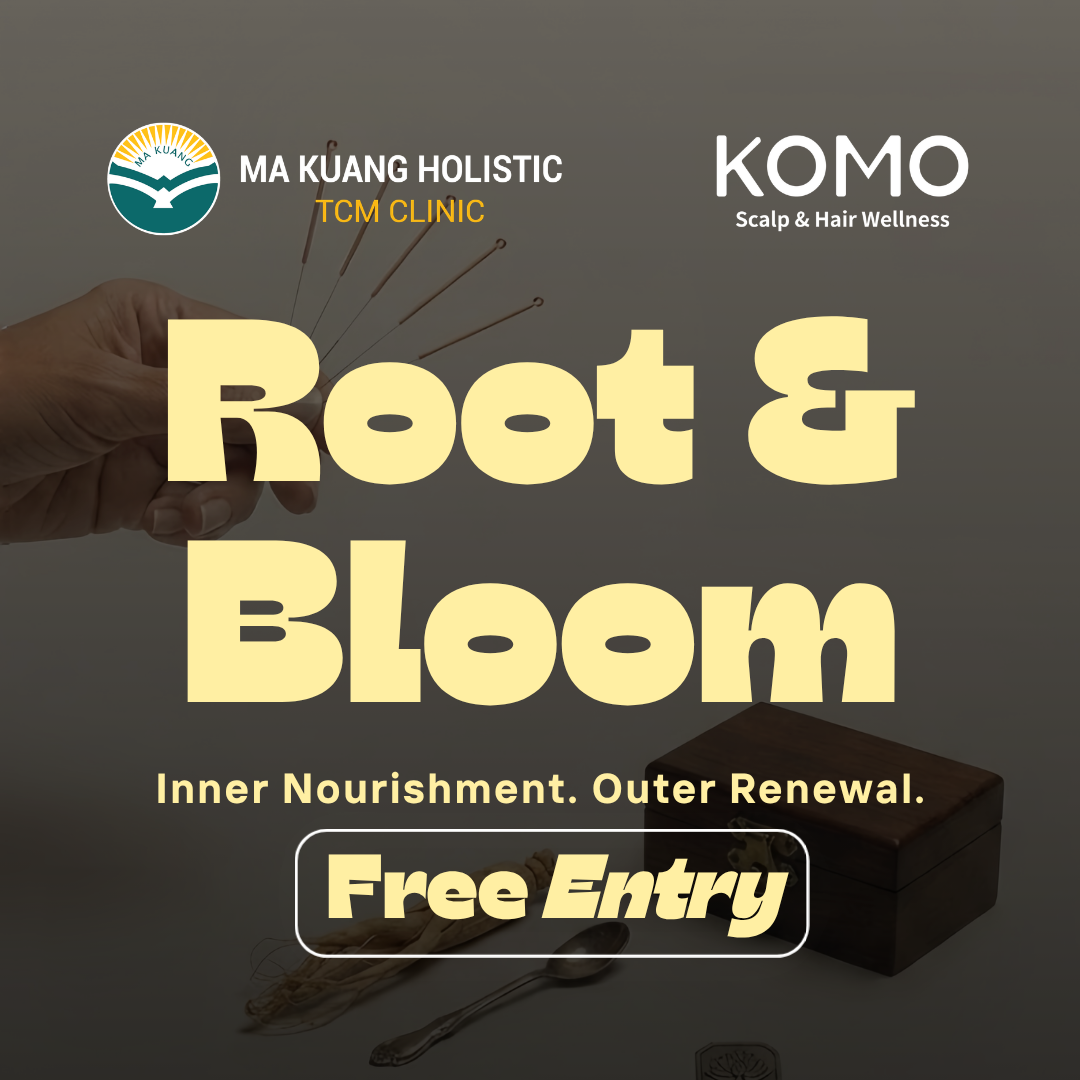
🤩 Root & Bloom – Inner Nourishment, Outer Renewal. Experience It for Free! ✨ Ma Kuang Holistic TCM Clinic and KOMO Wellness are joining forces for the first time – bringing you a unique wellness experience that blends technology and tradition. Happening on 29 August at Wheelock Place – mark your calendars! ❤️ Complimentary experiences include: 🎁 […]
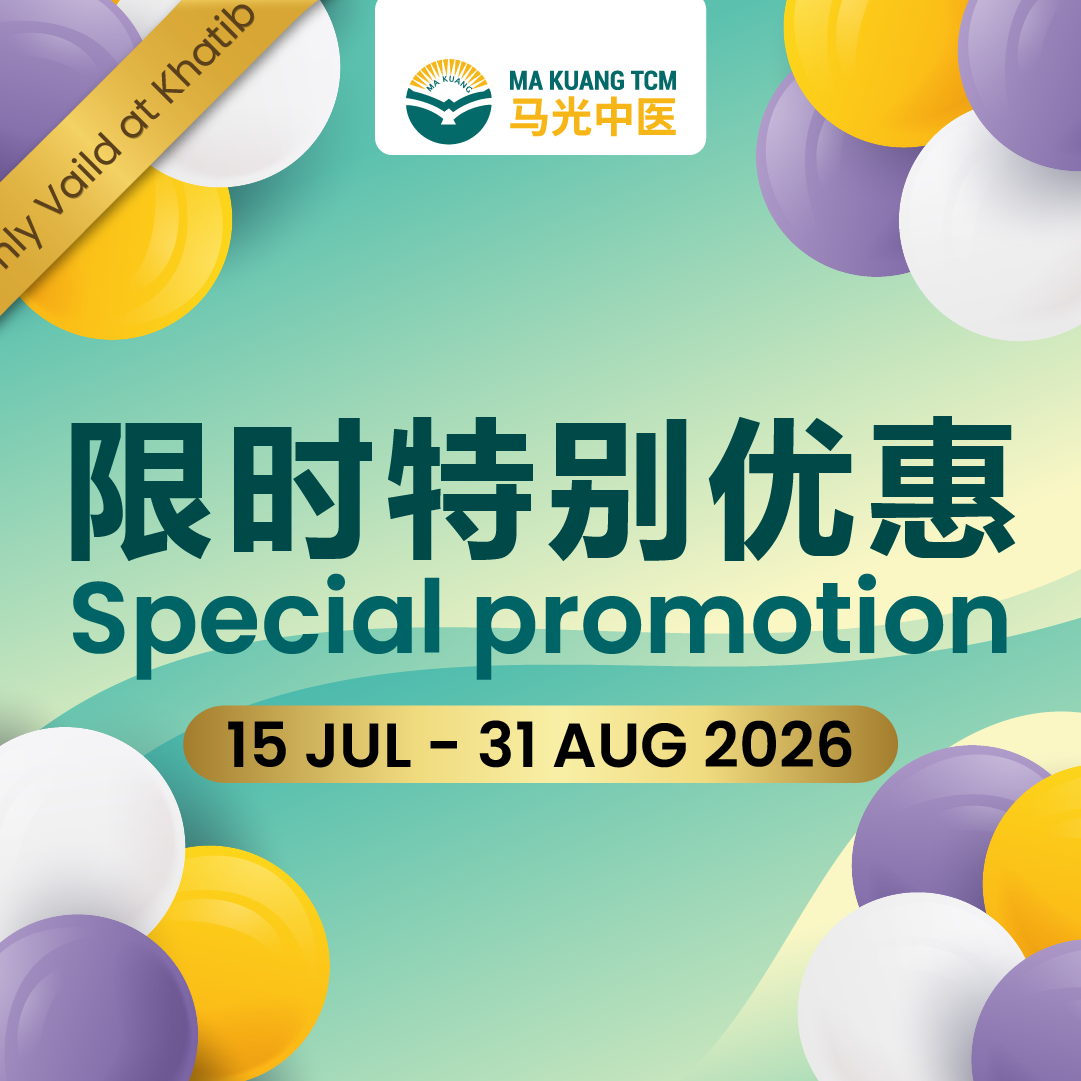
Ma Kuang TCM Khatib is rolling out a special promotion from 15 July to 31 August – first‑time visitors get to enjoy exclusive trial rates! ✨ First‑timer specials (exclusively for new customers at Khatib)Enjoy a FREE 10‑min Tuina on your first visit, with other selected treatments (Tuina+Cupping, Facial Guasha, etc.) starting from $38 nett – the perfect budget‑friendly way to unwind! ❤️ Package promos (open […]
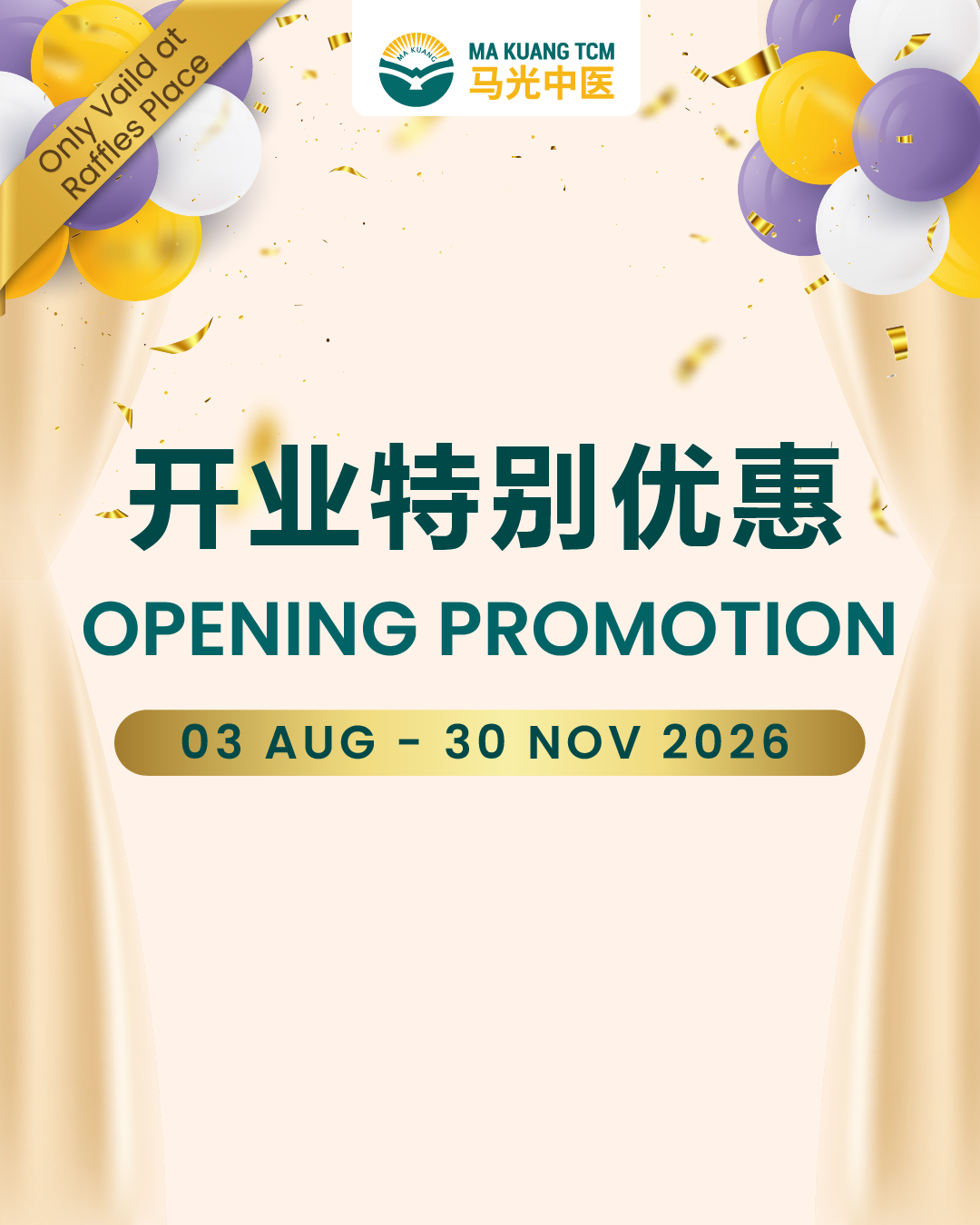
Great news for everyone in the CBD – Ma Kuang TCM has officially landed at Raffles Place, right on the 13th floor of RB Capital Building! Just a lift ride away, it’s perfect for a quick lunchtime recharge or an after‑work wellness session. ✅Free first consultation during off‑peak hours! 🤩First‑timer specials (exclusively at Raffles Place) […]
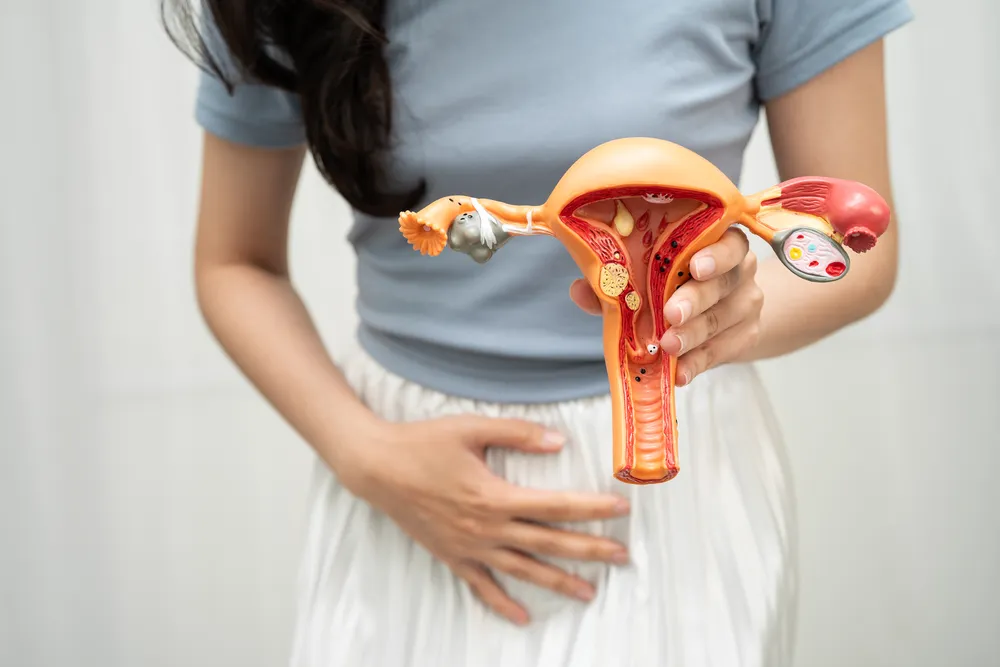
Struggling with irregular periods? Find out how Ma Kuang uses tailored TCM for fertility Singapore methods to regulate your cycle and improve ovulation. […]
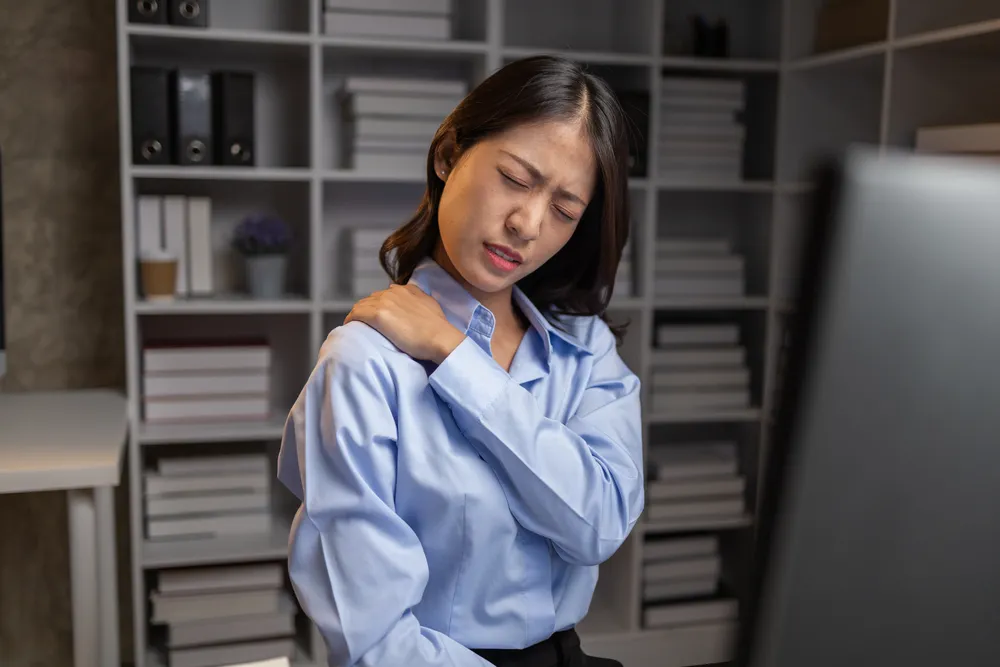
Constant neck and shoulder pain from working at your desk? Discover the lifestyle-changing TCM for pain management benefits that target root muscle tension. […]
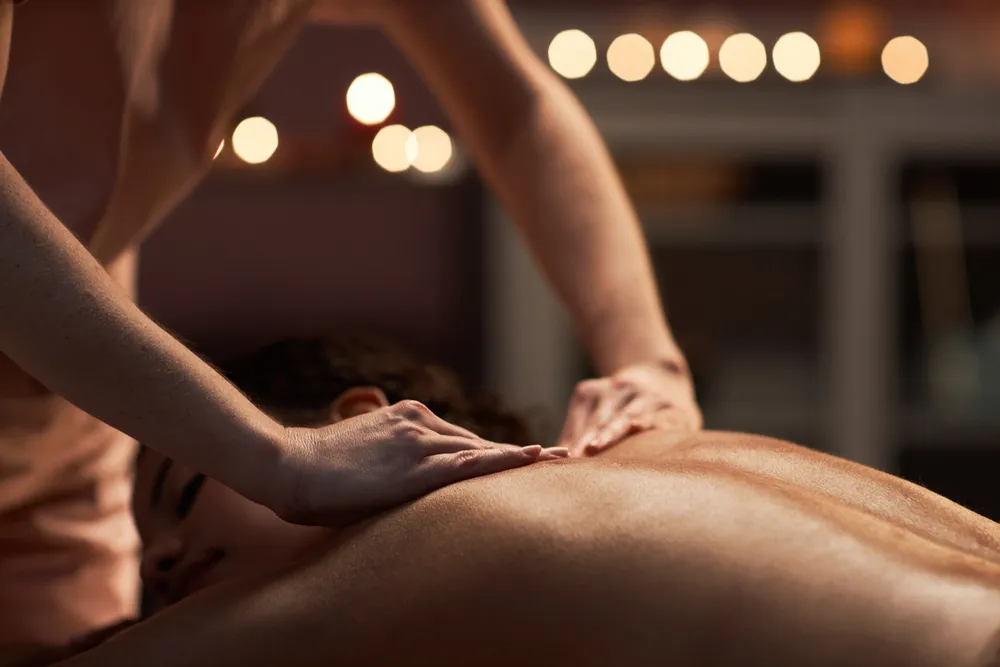
Tuina isn’t just for aches. Uncover the restorative tuina massage benefits for mental health and cognitive improvement, from easing stress to boosting mental focus. […]
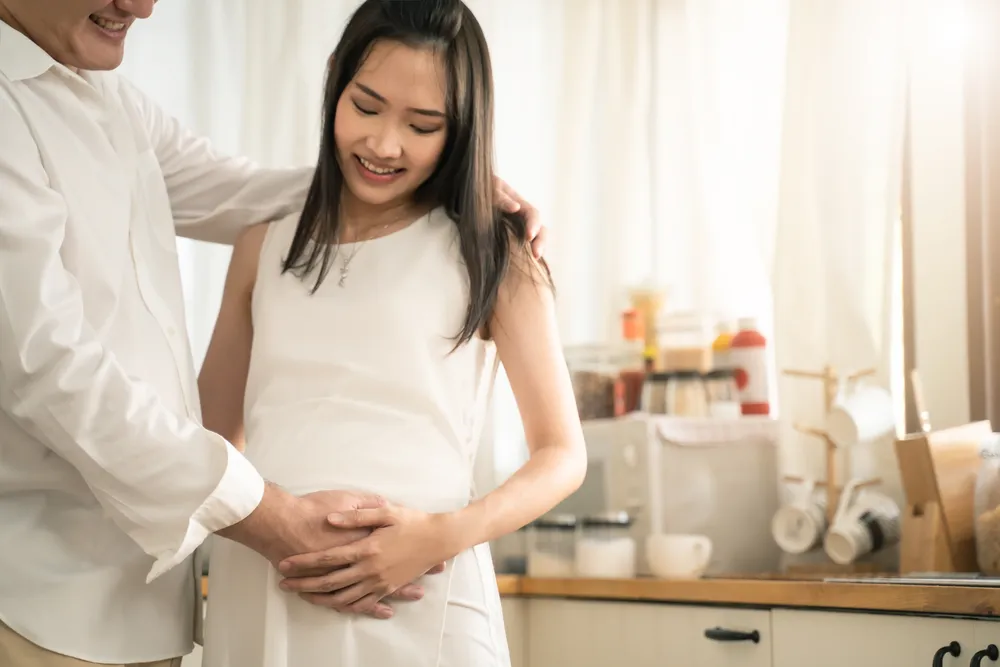
Address your safety concerns. Learn how Ma Kuang utilizes HSA-regulated Chinese medicine in our personalized TCM for fertility Singapore plans. […]
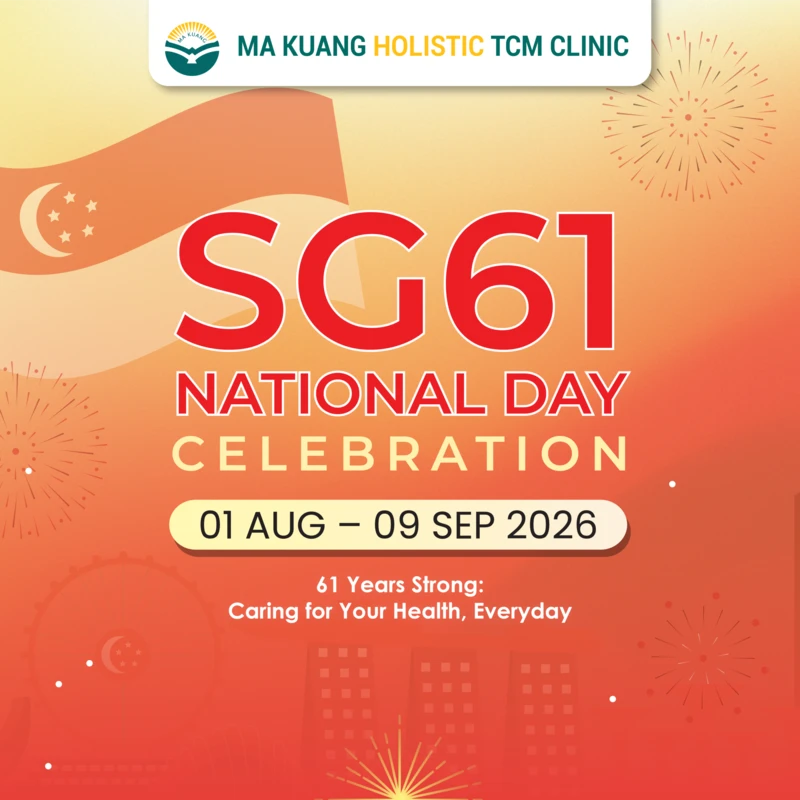
🤩 Happy 61st Birthday, Singapore! Ma Kuang Holistic celebrates National Day with you, with special TCM wellness offers! 🔔 From 1 Aug – 9 Sep 2026, give yourself the gift of health! ✨ First-timer exclusive: $61 OFF! ❤️ Purchase a 6‑session package and enjoy great value, plus a free gift (choose 1 of 3)! 📆 Promo […]
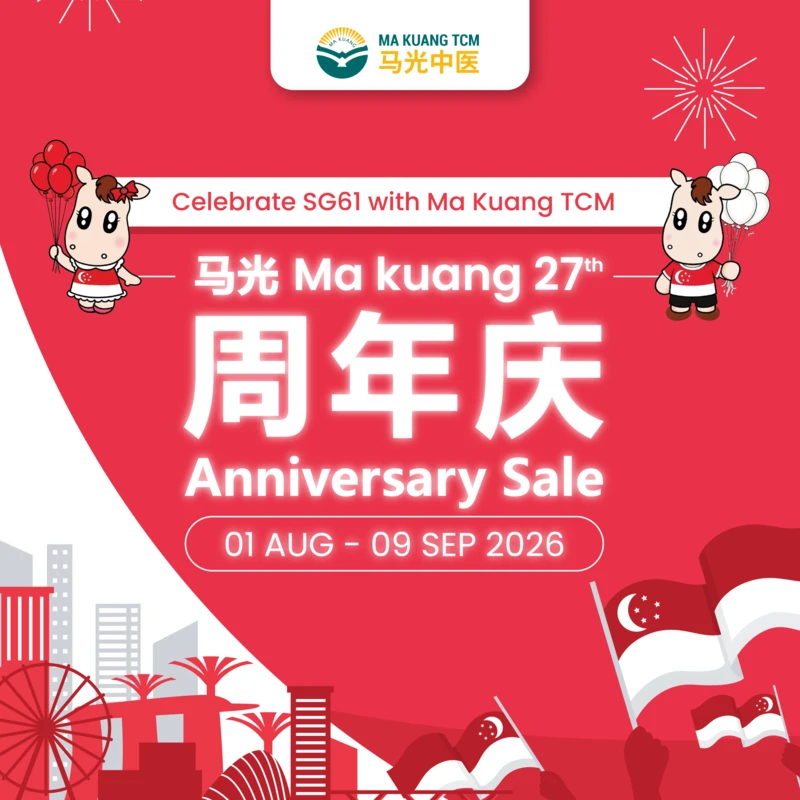
🎊Ma Kuang TCM turns 27 – and we’re celebrating Singapore’s 61st birthday with you! ✨From 1 Aug to 9 Sep, enjoy amazing promotions storewide: ✅Spend $150 and get FREE 1 Box Moisturizing Repair Cream OR Luo Han Guo Loquat Throat Drops (choose one)、 ✅Spend $500 and get FREE 1 Box Ladycare Soy Isoflavone OR Lighteeds / Lamoal Natural Prune Essence (choose one)、 ✅Seniors (60 […]
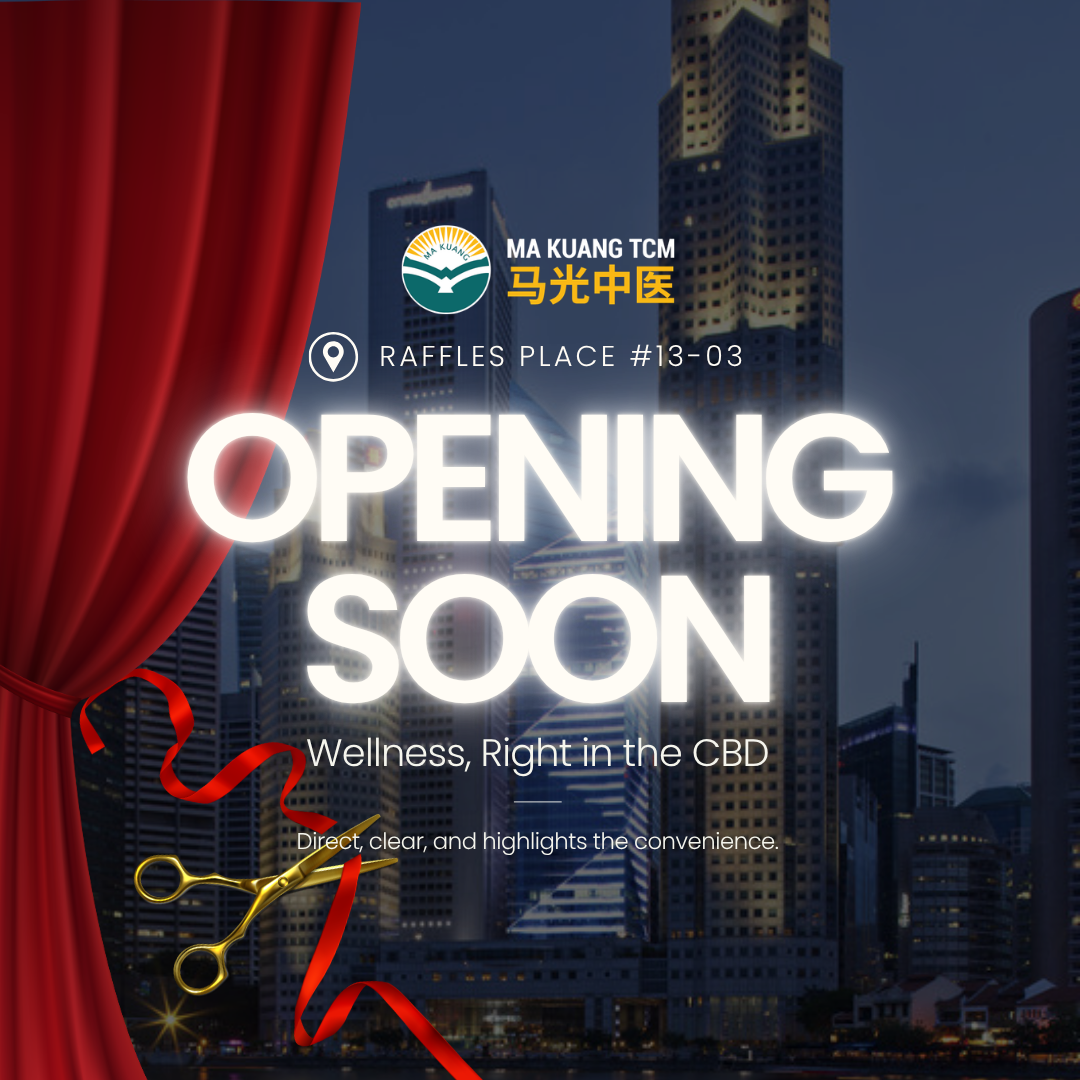
🎊We’re super excited to share that Ma Kuang TCM will be opening a brand-new outlet right in the heart of Singapore’s CBD – at Raffles Place! ❤️Whether you need a quick recharge during your lunch break or want to unwind after work, we’ll be right here for you. Wellness, right in the CBD. And yes, […]
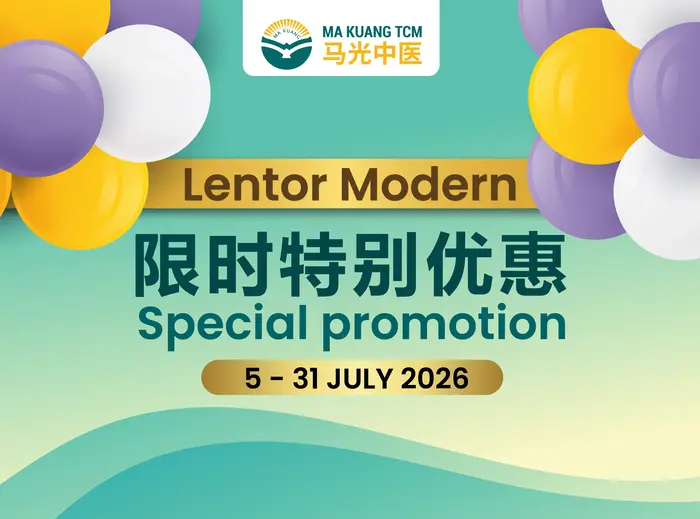
🎊Celebrate health and wellness with Ma Kuang TCM at Lentor Modern outlet. 🔔From 5 to 31 July 2026, enjoy limited-time offers designed to help you feel your absolute best! ✨Whether you are looking to address chronic aches or simply refresh your well-being, our physicians and therapists are here for you. […]
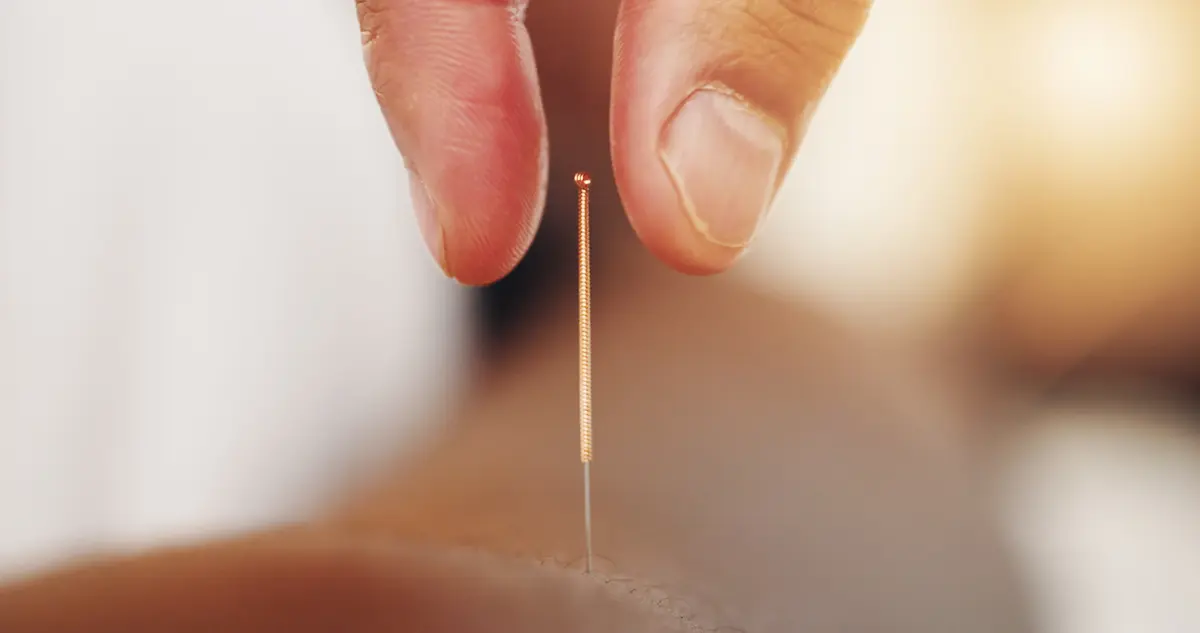
Most Singaporeans have some passing familiarity with acupuncture treatment in Singapore. They usually think of fine needles, specific points on the body, something to do with energy flow. What few people know is how much clinical research now backs it up for specific conditions. This is not a wellness trend. Acupuncture is one of the […]
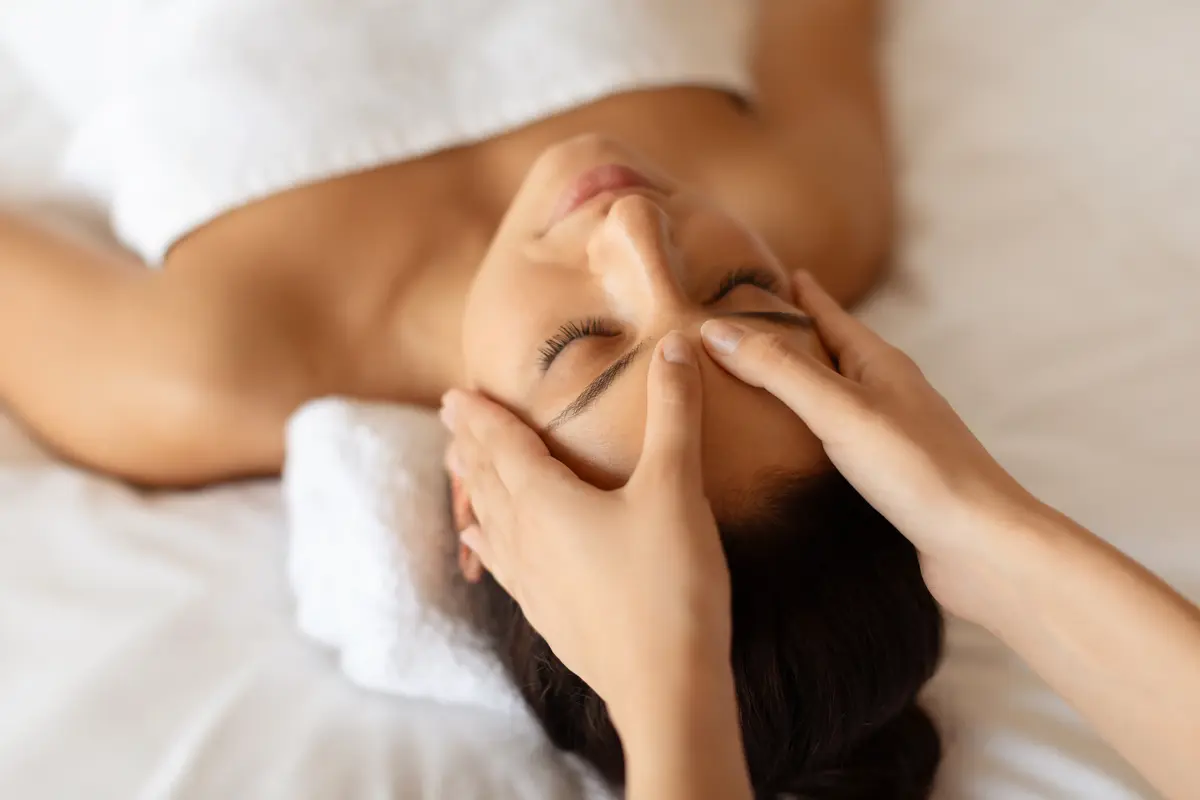
Searching for TCM headache treatment near you in Singapore? Here’s a practical guide to finding a registered, experienced clinic fast — without the guesswork. […]
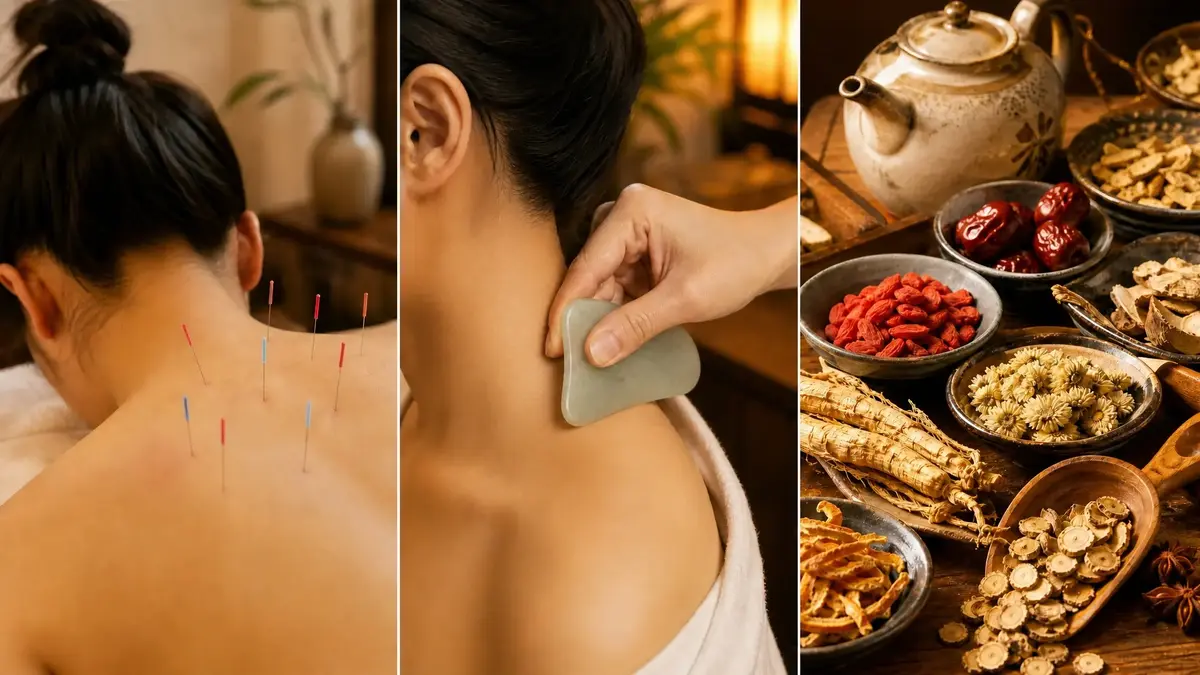
From tuina massage to acupuncture, here’s a simple guide to what each TCM service in Singapore does to your body and which conditions each one targets. […]
Ma Kuang Holistic TCM is pleased to announce that, effective 1 February 2026, we will officially enter into a partnership with iXchange (IXPL). Under this collaboration, eligible iXchange members will be able to access Ma Kuang Holistic TCM clinics as part of the iXchange designated medical service network. iXchange will oversee service coordination and claims management, and will […]
😵Burned out, tossing and turning at 2 AM, or dealing with that stubborn “office shoulder” ache ❤️Your body is trying to tell you something! Modern stress and long desk hours take a heavy toll on our physical and mental wellness. The good news? Relieving these modern ailments doesn’t have to be complicated. 🤩Join Ma Kuang […]
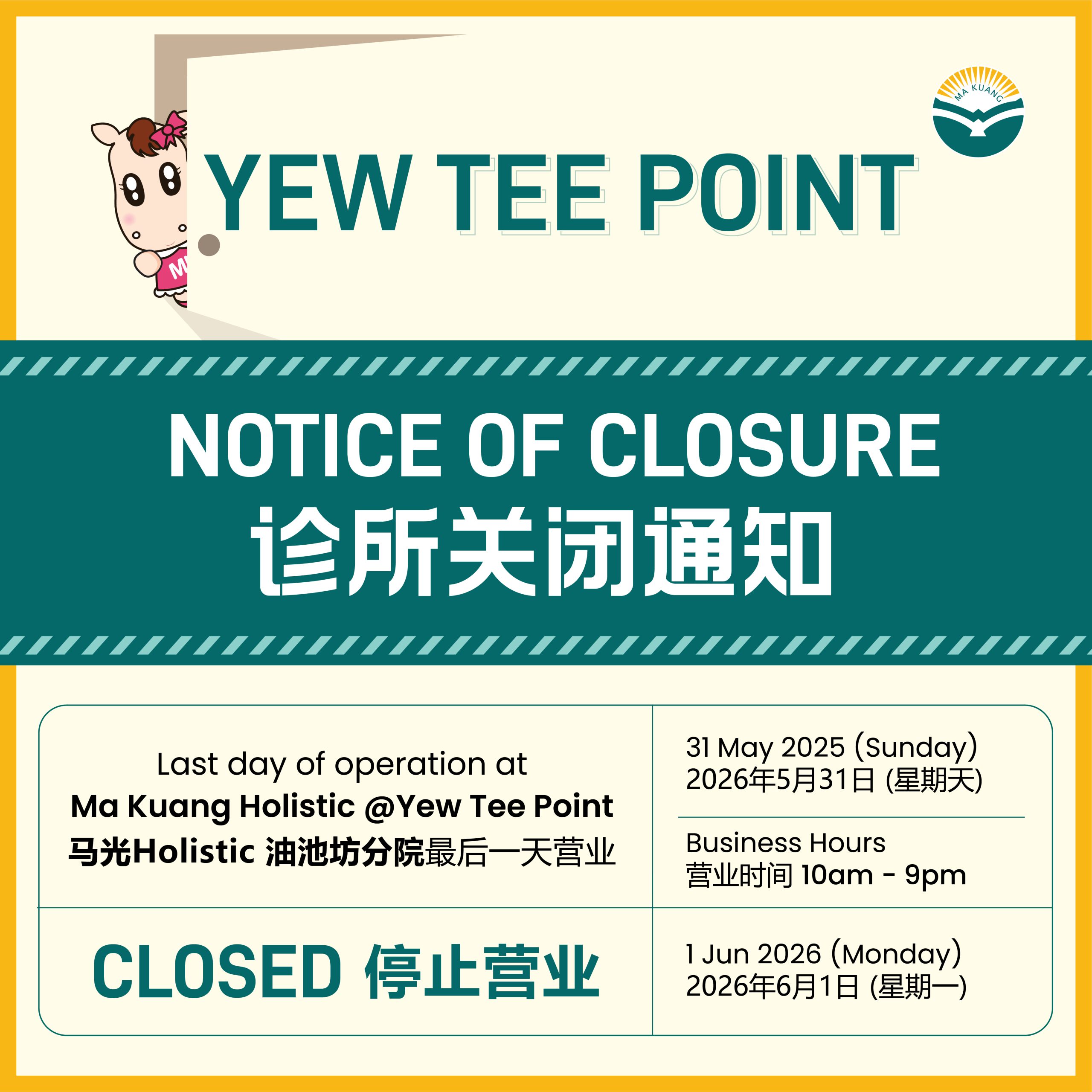
Our Ma Kuang Holistic TCM @ Yew Tee Point outlet will be ceased operations on 1 Jun 2026(Monday) as part of the company’s expansion plan. Your unexpired credit package can be utilised at all Ma Kuang Holistic TCM (excluding Ma Kuang TCM Clinics & Women’s and Children’s clinics). We look forward to serving you again […]
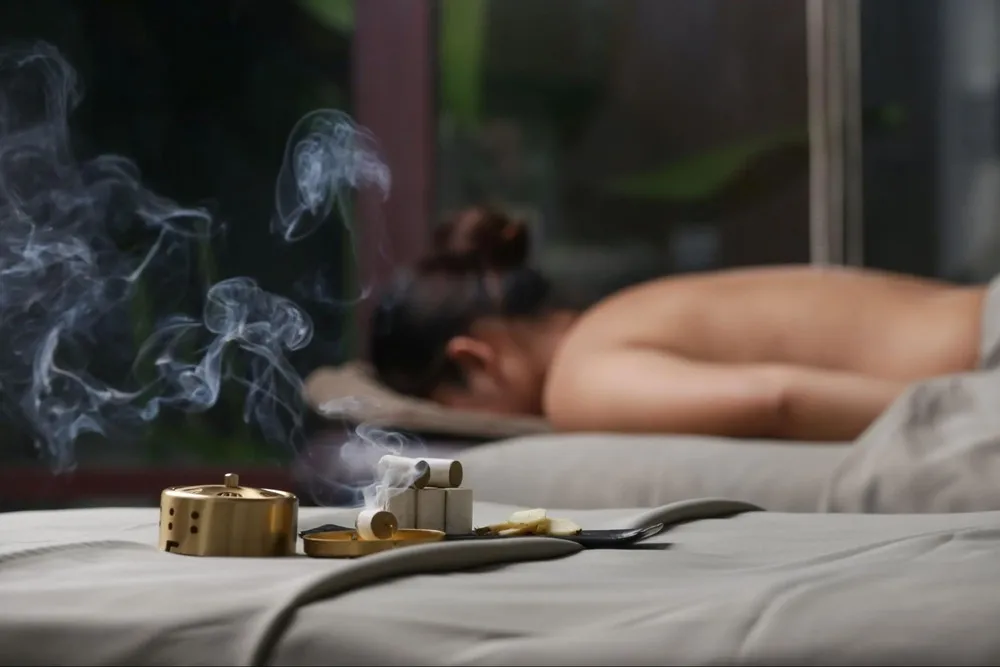
Explore TCM pain management in Singapore. Learn its benefits, how treatments like acupuncture and Tuina work, and how to choose a trusted TCM clinic. […]
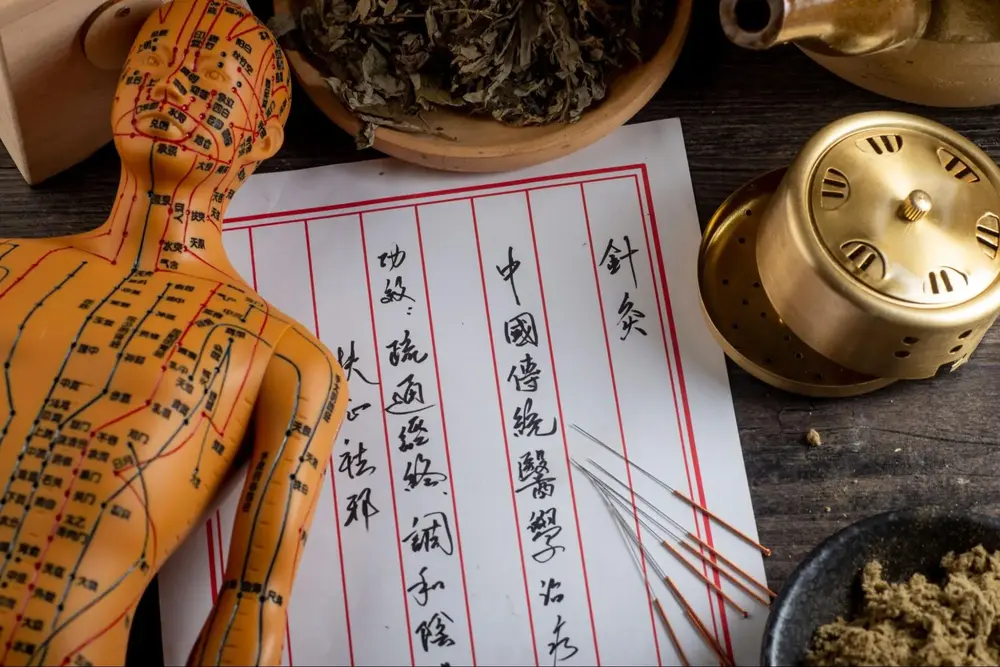
Discover how Traditional Chinese Medicine treats menopause in Singapore, from hot flashes to insomnia. Learn about herbal remedies, acupuncture, and what to expect from TCM treatment. […]
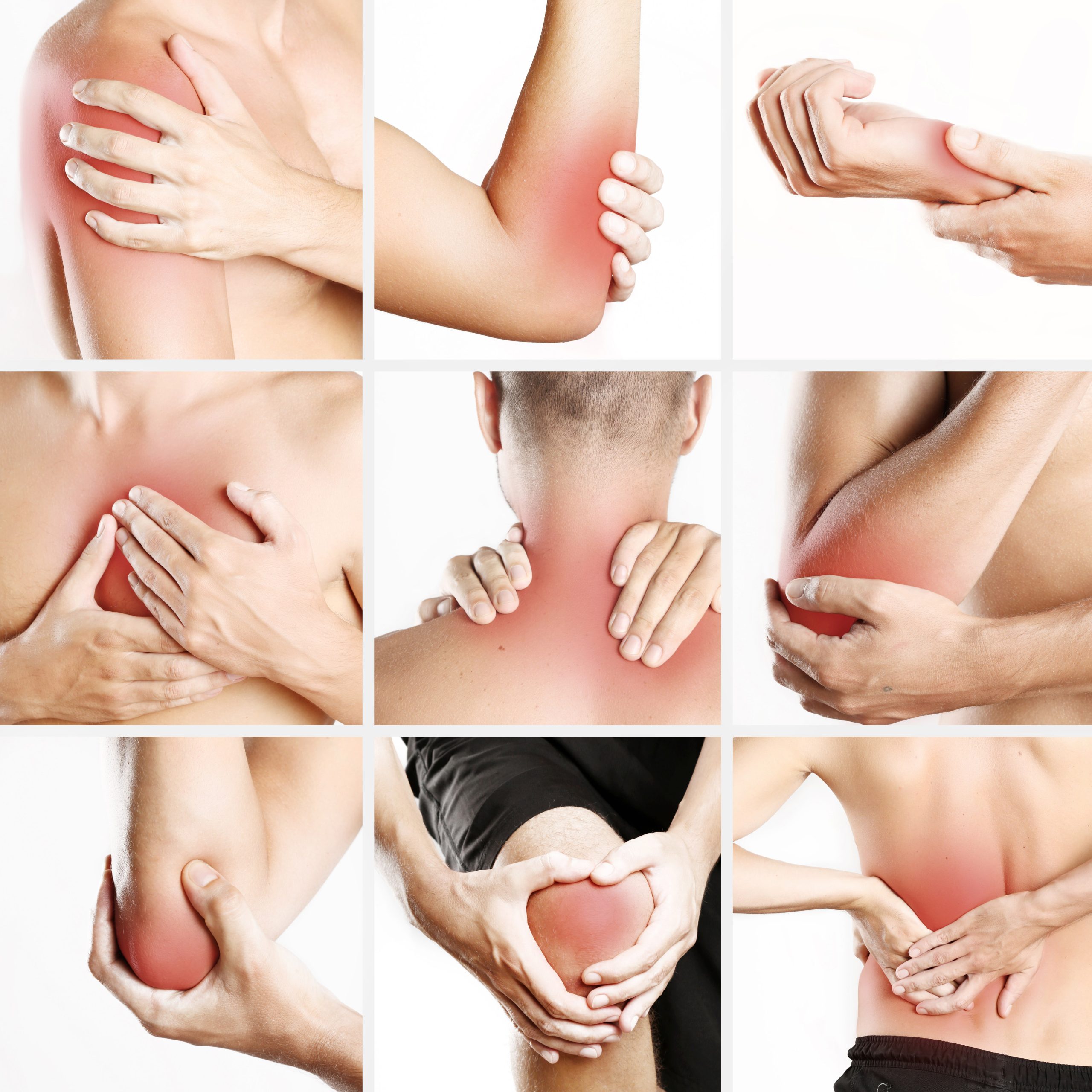
Understanding Your Pain Pain is a complex, personal experience. In TCM, we view physical discomfort not just as a symptom, but as a signal that your body’s internal balance—or Qi and blood circulation—may be disrupted. Our physicians take the time to understand your unique constitution. By identifying the root causes, we develop personalized management plans […]
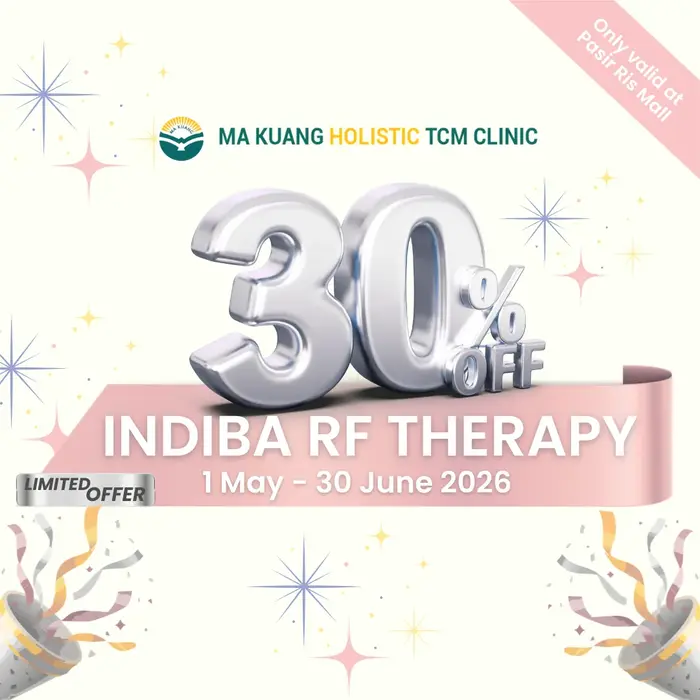
🤩At Ma Kuang, we believe in bridging the gap between traditional wisdom and modern innovation. We are excited to introduce our INDIBA® Proionic Therapy sessions—designed to support your body’s natural regenerative processes through high-frequency radio technology. ❤️Whether you are looking to manage persistent muscle tension, revitalize your complexion, or support your wellness journey, our expert […]
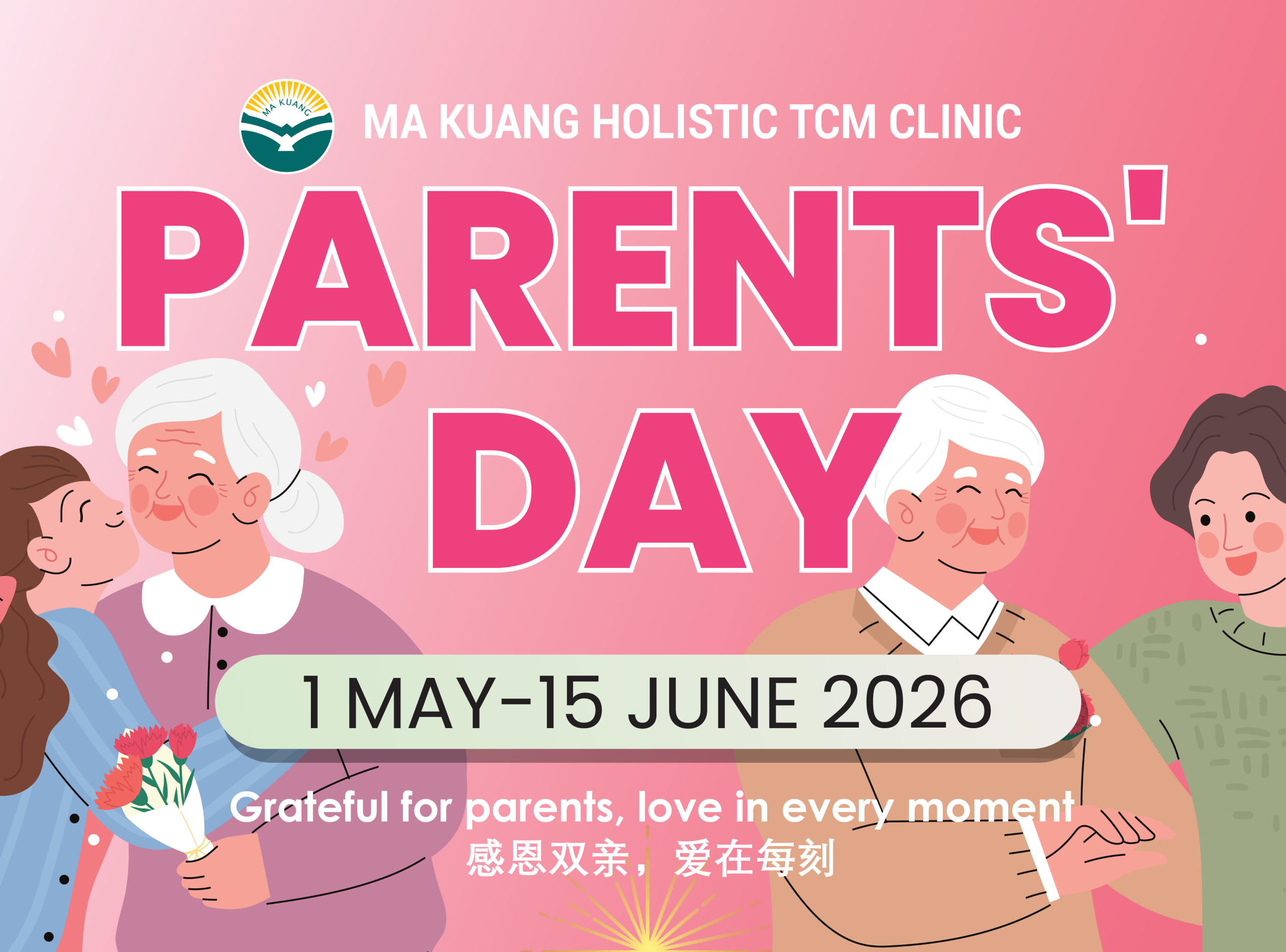
❤️Parents’ Day is more than just a celebration; it is a meaningful opportunity to pause and honor the pillars of our lives. They have devoted so much to our growth and happiness; this year, let’s show our gratitude by prioritizing their well-being.❤️ ✨From rejuvenating treatments to essential health support, we have curated a selection of […]
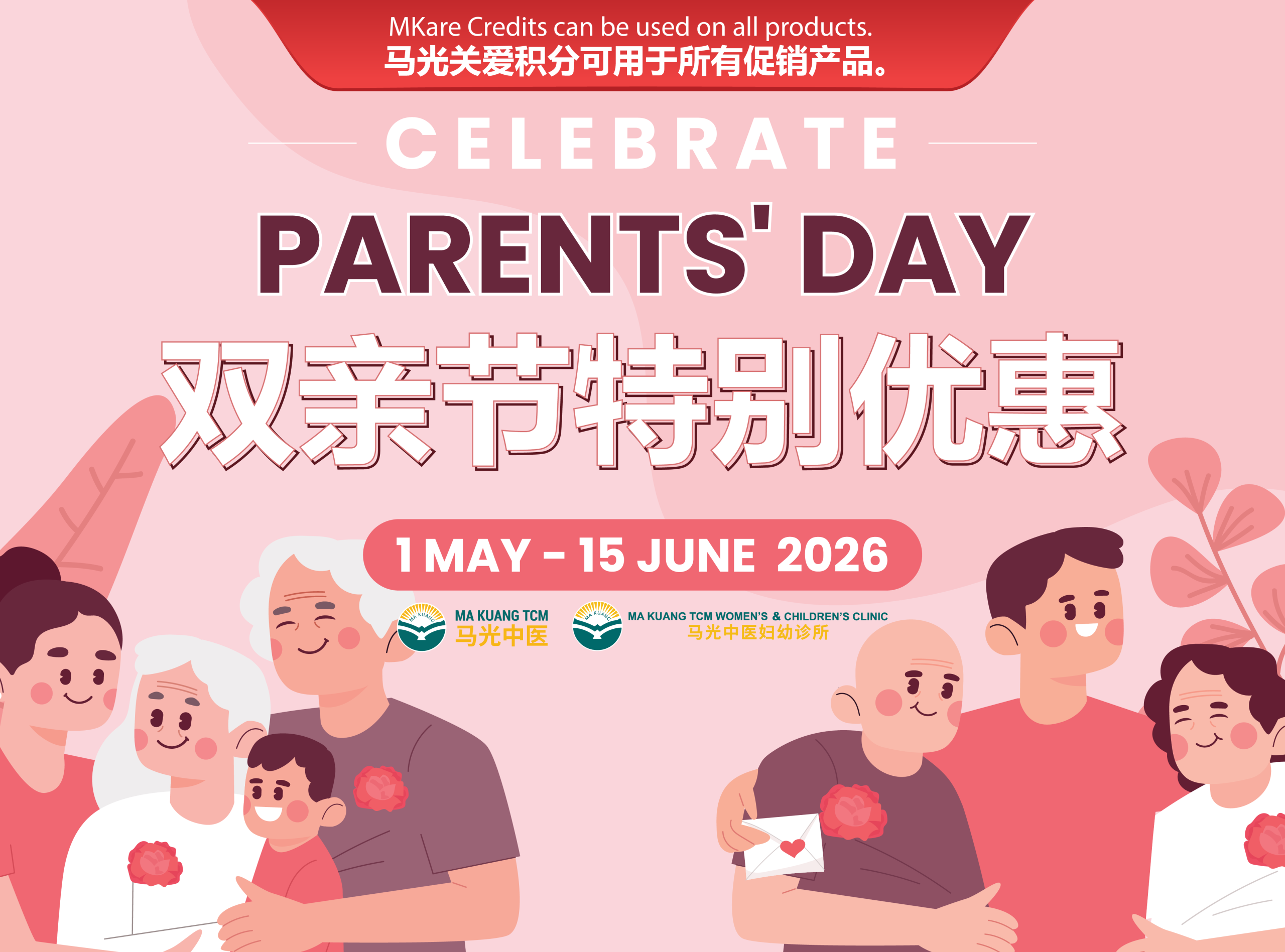
❤️They’ve spent years nurturing us, supporting us, and putting our needs first. This Parents’ Day, it’s our turn to return the favour. Instead of the usual gestures, give them something that speaks to their health, vitality, and well-being.❤️ ✨Explore our exclusive Parents’ Day bundles, store-wide discounts, and special service packages below. 🎀Give back the care […]

Experience a new chapter of care with our exclusive Wellness Special Deals. From specialized acupuncture to comprehensive pain management, prioritize your health with these limited-time offers throughout April 2026.⦁ Enjoy 20% OFF a wide range of treatment specials.⦁ Maximize your value with credit package promotions—get up to $2,000 in FREE credits! Promotion Period: 01 April […]

Ma Kuang TCM recently welcomed a delegation from the Malaysia Acupuncture & Moxibustion Association, including its President and practitioner representatives, to its Xinyi flagship clinic in Taiwan. This visit reflects the growing regional collaboration in Traditional Chinese Medicine (TCM) and highlights Ma Kuang’s expanding role on the international stage. During the visit, the delegation toured […]
Don’t let neck tension, back stiffness, or stubborn joint pain hold you back at work or home. Try Singapore’s trusted TCM Pain Management with zero long-term commitment. First Trial Promotions* 🔥 30 Min Tui Na (Cupping included) @ $38🔥 TCM Consultation + 30 Min Pain Management @ $68 *Available on selected clinics. Is Your Body […]

Celebrate beauty, wellness, and self-care this season with exclusive promotions at Ma Kuang Holistic TCM @ West Mall.This Women’s Day Special Sale is designed to help you restore balance, rejuvenate your skin, and support your body naturally through Traditional Chinese Medicine therapies. 🎉Enjoy up to 38% OFF selected treatments📆Promotion Period: 8 March 2026 – 21 […]

Celebrate yourself this International Women’s Day with exclusive wellness treatments designed to restore balance, beauty, and vitality. At Ma Kuang Holistic TCM Clinic, we combine authentic Traditional Chinese Medicine with modern wellness techniques to help women look and feel their best. 🎉Enjoy up to 38% OFF selected treatments📆Promotion Period: 8 March 2026 – 21 March […]

✨Check out our updated clinic hours for 2026. 🧨Don’t let “heatiness” get the better of you—book your appointments early to beat the CNY crowd! […]

🎉Ready to transform your body and glow? Kickstart your wellness journey with our exclusive festive deals on acupuncture, slimming, and holistic therapies.🔔Promotion Period: 1 Feb 2026 – 28 Feb 2026 🧨Special Deals for All Customers✨Treat yourself to our signature services at festive prices. 🎉Exclusive Credit Packages🎁More Credits, More Rewards. Enjoy bonus credits, complimentary treatments, and […]
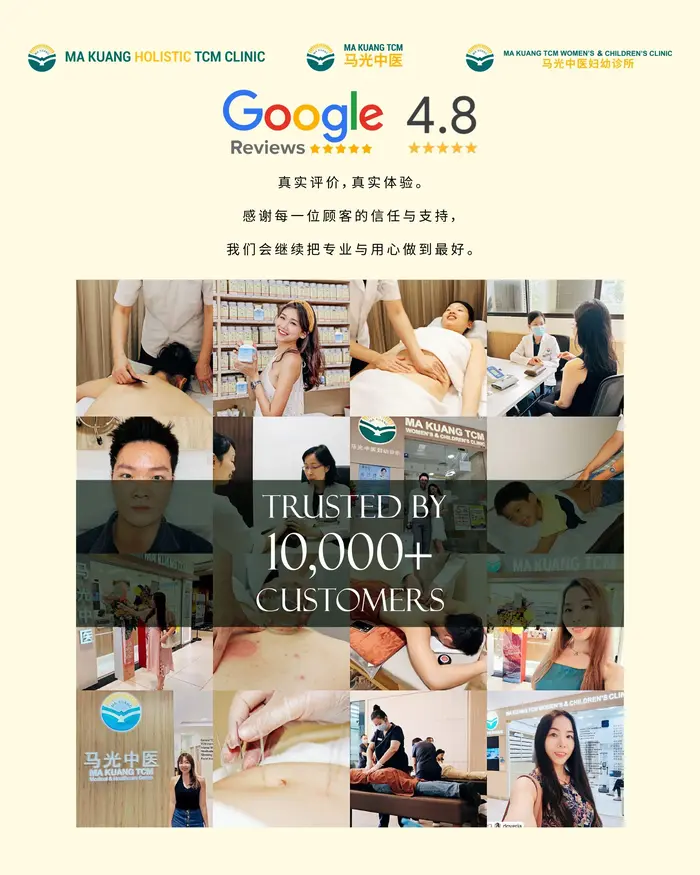
❤️Real stories of recovery from the Ma Kuang community.❤️ Wellness is a journey, and we are honored to be your guides.✨Our patients come to us seeking balance; they leave with renewed vitality.❤️From chronic pain relief through precision acupuncture to holistic internal conditioning, our Google Reviews reflect our commitment to your well-being.😃Don’t just take our word […]

🧧Pampering yourself this Lunar New Year is easier than ever. Whether you’re dreaming of glowing skin or a slimmer silhouette, our CNY Flash Sale has everything you need to shine! ✨Exclusive Credit Package Upgrades – The More You Top Up, The More You Get! 🔔Incredible Bonus: Receive up to $1,000 FREE credits with your package […]

✨Exciting News – Ma Kuang TCM @ Lentor Modern #01-12 is opening soon (Next to Lentor MRT)! ✨ 🎉Grand Opening Special Offers! Don’t miss out!🎁 ✅Irresistible deals up to 70% OFF ✅MKARE Credits can be used on all products! ✅Package buy 5 free 1 ✅Promotion starts from 2 Jan 2026 until 2 Mar 2026. ✅FREE […]

Don’t miss out on our biggest sale of the year! Enjoy our LIMITED Time and exclusive promo for 𝐌𝐊𝐀𝐑𝐄 𝐂𝐫𝐞𝐝𝐢𝐭 𝐏𝐚𝐜𝐤𝐚𝐠𝐞❗️ 🎉 🎁 and stock up on your favorite TCM products. It’s the perfect time to invest in your health and wellness. 🛍️✨ ✅Irresistible deals up to 30% OFF ✅Promotion starts from 1 Dec 2025 […]

Don’t miss out on our biggest sale of the year! Enjoy our LIMITED Time and exclusive promo for 𝐌𝐊𝐀𝐑𝐄 𝐂𝐫𝐞𝐝𝐢𝐭 𝐏𝐚𝐜𝐤𝐚𝐠𝐞❗️ 🎉 🎁 and stock up on your favorite TCM products. It’s the perfect time to invest in your health and wellness. 🛍️✨ ✅Irresistible deals up to 30% OFF ✅MKARE Credits can be used on […]

Our Ma Kuang Boon Keng outlet will be ceased operations on 1 Jan 2026(Thursday) as part of the company’s expansion plan. Your unexpired credit package can be utilised at all Ma Kuang Clinics including Women’s and Children’s clinics (excluding Ma Kuang Holistic TCM). We look forward to serving you again at other branches. We apologize […]

Want to boost your health and energy through everyday meals? Join our Basic TCM Medicated Diet for Health and Wellness Practitioners course and learn how to use TCM wisdom to make your food both delicious and nourishing! Date & Time: 9 & 16 Nov 2025 (ENG) or 23 & 30 Nov 2025 (CN) @ 9:30am […]
20251015-04-scaled.jpg)
Traditional Chinese Medicine (TCM) recognizes that children have a unique constitution that differs from adults. Their meridians are still in the developmental stage, making them more delicate and sensitive than adults, which can result in a higher risk of illness and health issues. According to TCM, babies and children under the age of six are […]

Our Ma Kuang @ White Sands will cease operations on 1 Nov 2025 as part of the company’s expansion plan. Your unexpired credit package can be utilised at all Ma Kuang Clinics (except Ma Kuang Holistic TCM) We look forward to serving you again at other branches. We apologize for any inconvenience caused and thank […]

随着 Sin Kang TCM 正式加入 Ma Kuang 大家庭,并更名为 Ma Kuang Holistic TCM Clinic,我们非常高兴地向您介绍这位“新宝贝”——一个融合传统智慧与现代关怀的中医品牌,致力于为您带来更全面、更贴心的健康体验! 🌿 认识 Ma Kuang Holistic TCM Clinic 🌿 我们不仅是改名,更是升级!Ma Kuang Holistic TCM Clinic 延续 Sin Kang TCM 的温暖与专业,结合 Ma Kuang 20年的健康信赖,为您提供: ✅ 个性化中医问诊与调理✅ 专业推拿与疼痛管理✅ 优质中药与养生产品✅ 智能化预约与健康追踪系统 🎊 新宝贝驾到,暖心优惠即刻享 🎊 为庆祝全新启程,我们特别推出开业感恩回馈活动,邀您一同体验 holistic care 的美好: 📍 哪里找到我们? Ma Kuang Holistic TCM Clinic 分布于以下地点,欢迎您随时光临: 🌟 我们承诺: […]

Table of Content Gua sha is a time-tested Traditional Chinese Medicine (TCM) technique renowned for its ability to relieve muscle tension, enhance blood flow, and promote natural healing. Today, gua sha in Singapore is becoming a go-to wellness treatment for individuals seeking a non-invasive and effective therapy. One common question we hear from patients is: […]

Table of Content Acupuncture is one of the most well-known treatments in Traditional Chinese Medicine in Singapore. In recent years, more people have turned to TCM Singapore for natural, drug-free ways to manage their health. At a TCM healthcare medical centre, such as Ma Kuang, acupuncture is often used to relieve pain, improve sleep, and […]

Table of Content Do you often lie awake at night, tossing and turning, or perhaps you wake up feeling tired even after a whole night’s sleep? Sleep disorders are more common than you might think, especially in a fast-paced city like Singapore. The good news is Traditional Chinese Medicine (TCM) provides natural and holistic approaches […]

Table of Content Fertility challenges are increasingly common in Singapore, with one in six couples experiencing difficulty conceiving, according to the National University Health System. As awareness grows, more couples are considering natural and holistic therapies to support conception. Traditional Chinese Medicine (TCM) offers a complementary approach that focuses on balancing the body’s energy, regulating […]

Table of Content Recovering from surgery often brings lingering pain, swelling, and stiffness. While Western medicine relies on painkillers, more people in Singapore are turning to Traditional Chinese Medicine (TCM) pain management for natural relief. Unlike conventional treatments, TCM pain relief focuses on holistic healing, improving circulation, reducing inflammation, and supporting long-term recovery. Therapies like […]

Table of Content In Singapore, stress and anxiety remain widespread, revealing that 68% of employees feel stressed at least once a week, which is higher than the average in APAC’s 61%, as reported by the Human Resources Director. Beyond conventional treatments like counselling or medication, many are seeking natural solutions to restore balance. Traditional Chinese […]

《Every Body Knows》Pneumothorax Special: Recording Wrap-Up! ✨Have you heard of pneumothorax? 💨 Don’t ignore that sudden chest tightness or pain—it could be a sign of an underlying lung condition! In this special episode, a dedicated team of Western and TCM medical experts offers in-depth analysis from multiple perspectives on the causes and management of pneumothorax. […]

📢 Announcement: Temporary Closure for RenovationIn our continuous effort to serve you better, Ma Kuang Marsiling will be temporarily closed for renovation and upgrades from:🗓 15 September to 24 September 2025 During this period, patients may visit any of our nearby outlets for continued care and services. We sincerely appreciate your patience and understanding, and we look forward to welcoming you […]

HAPPY NATIONAL DAY, SINGAPORE! It’s our 26th Anniversary, and we’re celebrating YOU with incredible deals! To our beloved seniors (60 years old & above): This celebration is especially for YOU! As we mark 26 years of wellness, we’re kicking off our anniversary sale with a special nod to our golden generation. Enjoy $6 OFF total […]

Singapore, July 24, 2025 – A delegation of experts from Beijing University of Chinese Medicine recently visited Ma Kuang’s Jurong Point Women’s and Children’s Clinic in Singapore, engaging in an in-depth exchange with TCM Women’s And Children’s Senior Physician Lin Xiao Yan. During the interview, the students and faculty gained further insight into physician Lin’s extensive international […]

Menopause is not only a physical transition but also a time of emotional changes, hot flashes, and sleep disturbances. In this episode, Physician Zuo YaSong from Ma Kuang TCM joins @mediacorp to provide practical insights from a TCM perspective, including emotional regulation, meridian therapy, and dietary recommendations, helping women navigate this important life stage with […]

Is a silent threat slowly weakening your bones, leaving you vulnerable to painful fractures and limited mobility? Many of us don’t think about our bone density until it’s too late – a sudden break, a persistent ache, a life that feels smaller because of what our bones can no longer support. This lack of awareness […]

In this episode, @mediacorp invited Physician Lin Xiao Yan from Ma Kuang TCM to explore the mental and emotional challenges faced by caregivers. From long-term stress to emotional fatigue, learn how TCM can support caregivers in taking care of both others and themselves. A big thank you to all the experts and crew who made the shoot […]

Ma Kuang recently hosted an online training session led by a senior physician from Ma Kuang Taiwan, where our Singapore & Malaysia physicians deepened their clinical skills and TCM knowledge. At Ma Kuang, we believe in professionalism, continuous learning, and constant improvement — because your health deserves nothing less than our best. Thank you to […]

Are you constantly battling persistent body aches, stress, or a dull, tired complexion? In the hustle and bustle of Singapore life, it’s easy to overlook your well-being. Ma Kuang TCM is here to offer you a natural, holistic path to feeling your best, starting with two incredible first-trial promotions designed to address your concerns. Discover […]

Special June Gift: Give the Gift of Health to Your Parents! Ma Kuang TCM proudly presents the 【Parents’ Exclusive Benefit: Buy 10 Get 1 Free Package – Limited Time Offer!】 This gift represents lasting health, profound care, and the most sincere love for your parents! Traditional gifts might bring temporary joy, but our TCM package […]

We had an amazing time bringing wellness to RSM SG with our FREE TCM consultations! Our herbal foot bath packs and herbal eye masks were a hit, and the TCM pulse readings provided so many useful health insights and tips. Your employees’ well-being is our priority! Want to boost health at your workplace? Reach out […]

Discover why acupuncture treatment in Singapore is becoming a popular choice for pain relief, relaxation, and holistic healing.
[…]

Learn how you can create a balanced diet based on TCM principles that can enhance fertility, regulate hormones, and prepare your body for conception. […]

Enhance your pregnancy experience with these expert-backed TCM tips. Learn how traditional Chinese medicine supports both mother and baby’s well-being.
[…]

Ensure a safe and effective treatment experience by asking the right questions. Find out how to spot a good TCM clinic in Singapore. […]

Curious how Sports TCM can help you recover? Here are 8 common sports injuries, like sprained ankles and muscle strains, that TCM can treat. […]

Concerned about safety? Understand the benefits and potential side effects of using TCM for pain relief and how to choose the right treatment.
[…]

This Parents’ Day, let’s focus on what truly matters: the well-being of your amazing parents! Skip the usual and choose a gift that invests in their lasting health with Ma Kuang’s special promotion, featuring Traditional Chinese Medicine and our health supplements. • FREE Wong Yiu Nam PROBIOTIC JELLY (LUTEIN) (with min. spend of $120) • […]

Hougang Mall is undergoing enhancement works, but MA KUANG TCM (#04-19) IS OPEN as usual! For enquiries, WhatsApp or call 9116 8327. See you soon! 目前后港商场正在进行资产提升计划 (Asset Enhancement Initiative,简称 AEI), 旨在优化商场设施和购物体验。 尽管部分区域施工, 马光后港(#04-19)诊所照常营业, 不受影响。 […]

《Every Body Knows》EP4 [Rosacea] has been successfully recorded! Mediacorp has specially invited Physician Lin Xiao Yan to delve into [Rosacea] , a common but often overlooked skin condition. Through the expert’s insights, you’ll gain valuable tips on care and treatment! A big thank you to all the experts and team members who made this recording […]

Yay! So excited to see our NETS friends again! 🎉 We absolutely love sharing health secrets with our hardworking pals, keeping everyone energized at work! 💪 Let’s take a break and discover the amazing world of TCM wellness! ✨ Cherishing every moment, looking forward to creating more wonderful memories together! Stay tuned for more exciting events! Physician […]

我们特别邀请了 馬光醫療網 建功马光中医诊所的廖述贤院长和彰化马光中医诊所的许名钧院长,为大家带来了精彩的名医讲座,分享了专业卫教知识和常用针灸手法与处方。 各位医师们都表示受益匪浅,收获满满!这次交流活动不仅提升了马光中医的整体水平,也为我们未来的中医服务注入了更强大的动力。 让我们一同期待,马光中医能为大家带来更优质、更专业的中医方案! […]

💚💛 𝐂𝐞𝐥𝐞𝐛𝐫𝐚𝐭𝐢𝐧𝐠 𝟐𝟓 𝐘𝐞𝐚𝐫𝐬 【𝐅𝐑𝐄𝐄 𝐓𝐂𝐌 𝐟𝐨𝐫 𝐘𝐨𝐮 & 𝐘𝐨𝐮𝐫 𝐂𝐨𝐦𝐦𝐮𝐧𝐢𝐭𝐲】💚💛 As a way of giving back to the community, we’re excited to invite you to our Free TCM Consultation + Prescribed Chinese Medicine event at Ma Kuang TCM!☺️✨ 📍 Location: 106A Henderson Cres, Singapore 151106 (Next to Redhill MRT)🕒 Date: Every weekend, 9 AM […]

Please be informed that all Ma Kuang clinics (including Women’s and Children’s Clinic) will be closed from 28 January 2025 (Tuesday) to 30 January 2025 (Thursday) for Chinese New Year holidays! We will resume operations on 31 January 2025 (Friday) We wish all of you a healthy and prosperous Chinese New Year! […]

为促进东南亚中医交流与合作,中国医药大学附设医院将为马光保健集团提供全方位的医疗支持。 • 附设医院医师线上或线下主讲继续教育(CPE)课程。 • 医院专家远距会诊,尤其是疑难杂症/重症病人。 马光保健集团对这次合作满怀信心,相信双方一定能够携手共进,共创辉煌! […]

✨🥳Exciting News! Our Bedok branch has expanded to the second floor! 🎉 ☺⭐Come celebrate with us and enjoy our amazing treatments. ✨We’re offering amazing TCM treatments to target your specific needs. ✅Pain Management✅60 Min Slimming Tuina✅60 Min Facial Bojin✅30 Min Tuina included Cupping Not sure which to choose? Our expert physicians and therapists will create […]

📣 [Notice of Temporary Closure]Please be informed that all clinics (including Women’s and Children’s Clinics) will be temporarily closed on Thursday, 12 December 2024 for our company annual dinner.We would resume business as normal on 13 December 2024 (Friday). Thank you for your kind understanding and continuous support! […]

🌿Ma Kuang TCM Workshops – Transform Your Health with Modern TCM! 🌿 Learn the art of self-care with TCM. Join our exclusive workshops for a unique and informative experience. ✨ Highlights of the Workshop: 👨👩👧👦 Family-Friendly – Kids under 12 join for FREE! 📍 Location: 106A Henderson Crescent, Singapore 151106⏰ Time: 10am – 1pm💲 Fee: […]

Don’t miss out on our biggest sale of the year! Enjoy our LIMITED Time and exclusive promo for 𝐌𝐊𝐀𝐑𝐄 𝐂𝐫𝐞𝐝𝐢𝐭 𝐏𝐚𝐜𝐤𝐚𝐠𝐞❗️ 🎉 🎁 and stock up on your favorite TCM products. It’s the perfect time to invest in your health and wellness. 🛍️✨ ✅Irresistible deals up to 30% OFF ✅MKARE Credits can be used on […]

🔥 为什么肩周炎也叫五十肩?听说痛更应该动,不动则更痛?长期做家务会导致五十肩吗?中医的温针灸你听过吗?马光中医师李炳梅在 MediaCorp Channel 8 的《医聊大小事》 讲解 “五十肩” 。 欢迎点击此连接观看影片!!✨ Link: https://www.youtube.com/watch?v=wWmHtF0fltI […]

【Healthy Lifestyle with TCM】A big thank you to Physician Meisya Agustina for sharing valuable insights at #Singtel. From dietary recommendations to mental health management, Physician Meisya shared invaluable knowledge and practical tips that you can easily incorporate into your daily life. ✨🤩 We cherish these connections and look forward to more memorable moments with Ma Kuang […]

𝐖𝐚𝐧𝐭 𝐭𝐨 𝐟𝐢𝐧𝐝 𝐧𝐚𝐭𝐮𝐫𝐚𝐥 𝐫𝐞𝐥𝐢𝐞𝐟 𝐟𝐫𝐨𝐦 𝐩𝐚𝐢𝐧? 🌿 Our recent TCM Health talk at #Starhub with Physician Lua Wei Feng was a huge success! We learned how TCM can effectively alleviate pain through time-tested techniques. From acupuncture to herbal remedies, Physician Lua shared invaluable knowledge and practical tips that you can incorporate into your daily […]

【从压力到放松:拔罐如何助力改善失眠?】 你感觉到失眠和压力在影响你的生活吗?😔 身体的疲惫和精神的紧张,可能正在向你发出需要放松的信号!💡 🌿 拔罐疗法:释放压力,提升睡眠质量 通过中医拔罐疏通经络、调节气血,帮你摆脱压力,轻松入睡。适合那些长期受到失眠困扰的朋友! 😴 放松身心:从拔罐开始,改善恶性循环 压力大、睡不好?拔罐疗法是你改善失眠、放松身心的有效方法!快来体验拔罐的神奇疗效。 🌙 想知道更多?立即报名参加我们的【马光工作坊】,让林钊任推拿师帮你找到属于你的舒适睡眠! 👉 立即报名:https://forms.gle/SCMih1zkH6hfaaHf7 📻 地点: 106A Henderson Crescent, Singapore 151106 ⏰ 时间: 10am – 1pm ✅ 工作坊优惠: • 每位参与者均可获得免费礼品袋(价值$28) • 马光关爱积分配套促销 • 保健品促销 • 免费试喝药材补汤 […]

【中医推拿如何舒缓及预防运动损伤?】 你的身体在“说话”,你听到了吗?🤔 如果你常运动,感觉到酸痛、僵硬、或者不适,这些都是身体发出的信号,提醒你需要及时调整和治疗!💡 🌿 **推拿疗法:缓解运动损伤** 中医推拿通过调理身体的气血循环,有效缓解由运动引发的疼痛和紧张。特别适合经常锻炼或户外运动的小伙伴们! 💪 **日常运动小窍门:轻松预防运动损伤** 预防胜于治疗!日常生活中有哪些简单的小动作能帮你减少运动损伤?快来学习,养成保护身体的好习惯吧! 🏃♀️ 想了解更多?赶紧报名参加我们明天的【马光工作坊】,推拿师林彥廷将为你解答! 👉 立即报名:https://forms.gle/SCMih1zkH6hfaaHf7 📻 地点: 106A Henderson Crescent, Singapore 151106 ⏰ 时间: 10am – 1pm ✅ 工作坊优惠: • 每位参与者均可获得免费礼品袋(价值$28) • 马光关爱积分配套促销 • 保健品促销 • 免费试喝药材补汤 […]

✨ Introducing Oxy Pressure Cupping Therapy: A NEW Approach to Pain Relief ✨ Are you tired of suffering from chronic body pain? Look no further! Ma Kuang TCM is introducing an innovative Oxy Pressure Cupping Therapy, a cutting-edge treatment that combines the best of traditional cupping with modern technology. What sets Oxy Pressure Cupping apart? […]

幼儿去托儿所,许多家长反映孩子一到学校就容易生病,这让很多父母非常头疼,也很心疼。 那么,为什么孩子刚去托儿所就容易出现感冒、咳嗽等问题呢?今天我们将从中医的角度来聊一聊如何调理和增强孩子的免疫力,帮助他们健康成长。 💬 马光妇幼医师赖慧芬将在这周五下午2:10pm-2:40pm 上 MediaCorp LOVE 972 给大家讲解《幼儿刚上学就生病,中医如何调理?》,记得收听! 📆 2024年9月20日(星期五) ⏰ 2:10pm-2:40pm Love 972 FM https://radiosingapore.org/love-972/ #马光开讲 #马光中医 #Makuang #MakuangTCM #免疫力 #LOVE972 […]

🎉 Happy 25th Anniversary, Ma Kuang! 🎉☺️ 9.9.2024 Congratulations on another year of growth, success, and achievement with us. Let’s look forward to the best in the coming years. 🌟 🎂 9.9 .2024 是马光中医的25岁生日,祝贺马光中医周年庆快乐!🎉 愿在未来的岁月里,继续秉承传统中医的精髓,为更多人带来健康与幸福!🌿✨ We’re incredibly grateful for your unwavering SUPPORT from humble beginnings to a thriving community. 🙏🎉 Cheers to many more years […]

【Solutions for Pain Relief through TCM】 A big thank you to Physician Li Xiang for sharing valuable insights at B2K Pet Care on the causes of body pain and TCM treatments. Physician Li Xiang not only addressed common everyday issues but also explained the underlying principles of pain and practical solutions. We cherish these connections […]

🌿Ma Kuang TCM Workshops – Let’s Feel the Power of TCM for Body & Mind! 🌿 Ready to enhance your self-care routine with practical TCM tips? Join us for an exciting hands-on experience at our exclusive workshops, where you’ll learn the best of Traditional Chinese Medicine to achieve balance and wellness. ✨ Highlights of […]

🌿Discover Ancient Wisdom for Modern Pain🌿 Our recent seminar at NETS on using Traditional Chinese Medicine (TCM) to Relieve Pain & Boost Wellbeing was a huge success! Physician Meisya Agustina (庄慧娜医师) shared invaluable knowledge and practical tips with a captivated audience of professionals.💚🤩 The event was filled with energy as participants learned easy-to-follow exercises for […]

中医药在东南亚的应用与发展正迎来全新机遇!我们诚挚邀请各界专家学者、医疗从业者和中医药爱好者,共同探讨中医药的创新实践与未来发展。 时间: 2024年9月22日 (星期日) 地点: 新加坡国立大学 Shaw Foundation Alumni House 2F Auditorium 这次盛会旨在分享台湾与东南亚国家中西医整合治疗的丰富经验,并通过中医临床病例工作坊,提升中医医疗照护品质。 * 分享中西医整合治疗经验 * 中医临床病例工作坊 * 推广传统医学人员的培训教育 * 提升中医临床技能 * 科学化中医脉诊介绍 * 促进东南亚国家与台湾中医传统医学人员之交流 千载难逢的机会,让您能与来自各地的专家学者交流,学习最新的中医药研究成果与实践经验,拓展视野并提升专业技能。期待您的参与,共同推动中医药的发展与进步! 立即报名,掌握先机! #中医药 #学术论坛 #中西医整合治疗 #传统医学 #国际交流 #新加坡 #台湾 #东南亚 #医疗照护 #马光中医 #中医中药 #保健养生 #马光 #Makuangtcm #makuang […]

🚀 𝗘𝘅𝗰𝗶𝘁𝗶𝗻𝗴 𝗖𝗮𝗿𝗲𝗲𝗿 𝗢𝗽𝗽𝗼𝗿𝘁𝘂𝗻𝗶𝘁𝘆: 𝗧𝘂𝗶𝗻𝗮 𝗧𝗵𝗲𝗿𝗮𝗽𝗶𝘀𝘁! Are you passionate about wellness and helping others? We’re looking for talented individuals to join our team as Tuina Therapist! • Earn up to $6000 per month! • Perfect for mid-career switchers – all are welcome to apply! • Multiple locations island wide • Training will be provided • […]

【 𝐍𝐚𝐭𝐢𝐨𝐧𝐚𝐥 𝐃𝐚𝐲 𝐂𝐥𝐨𝐬𝐮𝐫𝐞 𝐍𝐨𝐭𝐢𝐜𝐞】 📅 Our clinics* will be closed on 9 August 2024 (Fri) Singapore National Day. We will resume normal operating hours on 10 August 2024 (Sat). We apologize for any inconvenience this may cause. We wish everyone a happy holiday. Thank you! 🎉🎈 *Ang Mo Kio, Bedok, Boon Keng, Clementi (1F&2F), […]

Tired of unpredictable periods? 🗓️ Our TCM expert will share insights on the root causes of irregular menstruation and offer effective treatment plans. Join our TCM Workshops to regain control of your cycle! Your period, your rules! 👑 👉 Limited seats available. 𝙍𝙚𝙜𝙞𝙨𝙩𝙚𝙧 𝙣𝙤𝙬 𝙝𝙚𝙧𝙚 https://bit.ly/3xbgOOc 💻! Our admin will contact you for payment via […]

Ma Kuang Parents’ Day Promotion is here! Celebrate the amazing parents who do it all by supporting their well-being this Parents’ Day! This year, go beyond flowers and chocolates. Bring along your loved one and give the gift of lasting health with the wisdom of Traditional Chinese Medicine (TCM) and the power of health supplements. […]

Foundation of Balance: Yin and Yang are the foundational principles of balance and harmony in TCM. The ancient Chinese believed that all phenomena in the universe could be categorized into these two opposing yet interconnected forces. Interdependence: Yin and Yang are not static; they are in a constant state of flux and change. They […]

Traditional Chinese Medicine (TCM) offers various holistic approaches to improving sleep quality. TCM physicians consider various factors when assessing sleep quality and addressing sleep-related issues. Here are some TCM sleep tips and practices that may help you sleep better: Chinese Herbs or Medicine Powder: TCM may recommend specific Chinese herbal or medicine powder […]

In Traditional Chinese Medicine (TCM), sleep quality is closely tied to the balance of vital energy, or Qi, and the harmonious interaction of Yin and Yang energies within the body. TCM physicians consider various factors when assessing sleep quality and addressing sleep-related issues. Here’s how TCM views sleep quality: Flow of Qi and Blood: […]

Stress in terms of TCM In Traditional Chinese Medicine (TCM), stress is viewed as a disruption of the body’s natural balance and harmony. TCM understands stress as an internal imbalance of the body’s vital energy, known as Qi (pronounced “chee”), and the flow of Qi through the body’s meridians or energy pathways. When Qi becomes […]

Traditional Chinese Medicine (TCM) offers holistic approaches to balance the body and address various health concerns, including the effects of heat and humidity. Heat and humidity can affect the body’s internal balance, leading to discomfort, irritability, and various health issues. Here are some TCM strategies to help combat heat and humidity: Dietary Adjustments: Cooling […]

Traditional Chinese Medicine (TCM) takes a holistic approach to treating eczema, focusing on balancing the body’s internal energies and addressing the root causes of the condition. Ma Kuang TCM physicians believe that eczema is often the result of an imbalance in the body’s Qi (vital energy), Blood, and Yin-Yang energies. Here are some common TCM […]

Traditional Chinese Medicine (TCM) has its own approach to combating hair loss, which is rooted in the principles of balancing the body’s vital energy (Qi), promoting blood circulation, and addressing the underlying causes of hair loss. Ma Kuang TCM physicians believe that hair loss can result from imbalances within the body, and their treatments aim […]

Getting your skin and body ready for Chinese New Year is a wonderful way to start the year feeling refreshed and confident. Here are the top five tips to help you look and feel your best for the celebrations: Hydration and Balanced Diet: Drink Plenty of Water: Staying well-hydrated is essential for healthy skin […]

What is Acupuncture: Acupuncture treatment is a widely-known medical practice of traditional Chinese medicine (TCM) that has gained recognition and popularity worldwide. This holistic approach to health and well-being involves the insertion of very thin needles into specific points on the body to stimulate energy flow, promoting natural healing and relief from various ailments. The […]

What is Tuina? Tuina, often referred to as Chinese massage, is a therapeutic form of touch therapy that has been practiced for thousands of years in China. It involves various hand techniques, such as kneading, pressing, rubbing, and stretching, applied to specific points on the body to stimulate the flow of Qi (energy) and blood, […]

TCM, or Traditional Chinese Medicine, has a long history of using acupuncture as a form of therapy to treat a wide range of health issues, including facial acupuncture. Facial Acupuncture Facial acupuncture also known as cosmetic acupuncture, is a specialized branch of acupuncture that focuses on improving the appearance of the face and promoting overall […]

Acupuncture is an ancient Chinese practice that involves inserting thin needles into specific points on the body to stimulate energy flow and promote healing. Over the years, there have been various myths and misconceptions surrounding acupuncture. Here are some common myths and the corresponding facts about acupuncture: (Design pic material: acupuncture needles + body) Alt […]

In Traditional Chinese Medicine (TCM), kidney health is considered to be of utmost importance as the kidneys are believed to play a vital role in overall well-being. Unlike the Western medical perspective, TCM views the kidneys as more than just organs responsible for filtration and waste elimination. They are also seen as a part of […]

In traditional Chinese medicine (TCM), the kidneys are considered one of the most vital organs in the body and are believed to play a fundamental role in overall health. Chinese herbs have a long history of use and rich medicinal forms in traditional Chinese medicine (TCM) to support kidney health and address various kidney-related conditions. […]


